Commercial Water Damage in Riverdale
A wet business space creates decisions about staff access, stock and connected rooms as well as cleanup. Restoration starts with a clear work boundary and documentation that helps property representatives coordinate the next operational steps.
(888) 532-4616Discuss the affected business space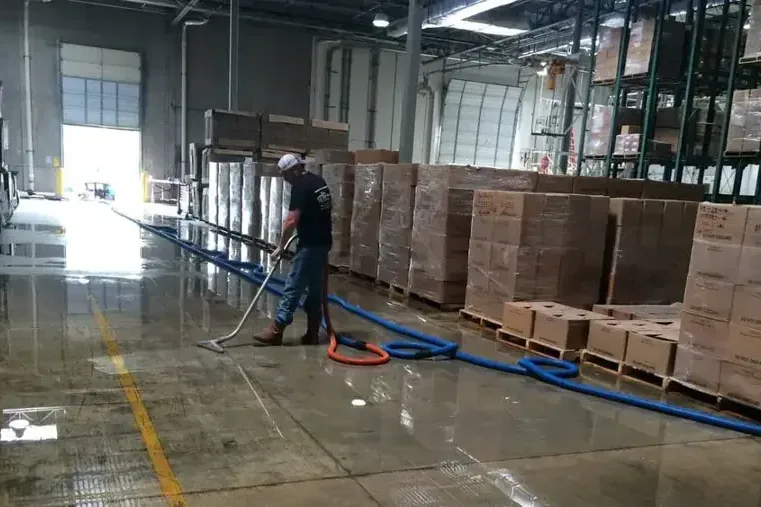
First steps for commercial water damage
- Identify the site contact
The caller should name the representative who can arrange entry, authorize cleanup decisions and coordinate with building management or neighboring occupants affected by the same release.
- Separate traffic from damage
Staff routes and customer access should stay clear of wet floors, electrical hazards and removal areas until a safe work boundary has been established at the property.
- Record rooms and inventory
Photographs and a room-based list should identify wet stock, furnishings and equipment before movement, helping managers distinguish contents decisions from the building restoration scope.
- Share operational constraints
Access hours, sensitive equipment and circulation needs help the team plan equipment placement and flag restrictions for management.
What does commercial water damage cost in Riverdale, GA?
Riverdale commercial water damage estimates depend on the building areas affected, contents handling and access complexity. A limited office loss differs from water crossing several occupied spaces or reaching fixed equipment. The written scope should distinguish mitigation, stock decisions, source repair and reconstruction responsibilities.
Limited business room
- Single work area
- Accessible surface cleanup
- Focused drying record
Multiple occupied spaces
- Connected room damage
- Contents coordination needs
- Expanded equipment plan
Large or complex loss
- Broad material exposure
- Restricted operational access
- Detailed room monitoring
Water category, wet area, material class and the delay before drying change the total. The water damage cost calculator compares a planning range before an on-site assessment.
The commercial water damage process
- 1
Establish contacts and scope
The team checks source status and property authorization, then creates a room record for access decisions and communication with managers, occupants and repair specialists.
- 2
Organize removal and contents
Water collection follows inventory documentation, with equipment and debris routes kept inside the work boundary and away from unaffected business circulation areas.
- 3
Dry inspected assemblies
Monitoring points follow the wet materials, while equipment placement accounts for safe access around fixed equipment, shared partitions and spaces that remain occupied.
- 4
Deliver the property handoff
The completion record identifies moisture results and remaining room limitations, helping the property representative coordinate reconstruction, equipment service and business-specific reopening decisions.
Business water damage creates overlapping responsibilities: source repair, building cleanup, stock handling and decisions about occupancy. A commercial restoration scope in Riverdale should name the affected spaces and the person authorized to coordinate access. That organization helps the crew work around equipment and contents while giving managers a clear picture of the areas still restricted or awaiting repair.
Define the property and decision contacts
Georgia State Route 85 is also named Clark Howell Memorial Highway. Merchant Shopping Center and Riverdale Town Center provide additional commercial location references. At an affected property, the first discussion should identify the suite or work area, building access contact and any adjoining occupants who need information about water reaching shared surfaces or circulation spaces.
The cleanup plan should distinguish tenant contents from building finishes and identify who can authorize movement or removal. Photographs and room labels make those decisions easier to track. A wet storage area, office and public entrance can require different handling arrangements even when the same release affected all of them.
Protect operations through a clear work boundary
Access planning considers staff routes, equipment movement and the condition of exits. Remaining open is a property-specific decision that depends on hazards and the scope of work. The restoration team should describe restrictions clearly rather than allowing normal traffic to cross wet floors, exposed cavities or areas where contaminated material is being handled.
- Identify a property representative for access and scope decisions.
- Record affected inventory before stock is relocated or marked for disposal.
- Keep equipment routes from blocking required exits or clean circulation paths.
- Check shared walls and adjoining rooms when water crosses a tenancy boundary.
Staff should avoid entering water around powered equipment, electrical panels or unstable ceiling materials. Machinery and building systems may require qualified isolation before cleanup access. Where sewage or outdoor contamination is involved, the work boundary also needs appropriate exposure controls before employees handle stock or move furnishings through the affected area.
Make the drying record useful to the business
Commercial-scale water removal begins with accessible liquid and surface conditions. When the source involves drain wastewater, sewage damage handling changes material and access decisions. The scope should account for those conditions before equipment placement and room availability are discussed with the property representative.
Drying records should use consistent room names and identify the materials monitored in each area. Progress updates can then explain which restrictions remain, what repair access is still needed and which contents decisions are outstanding. The final handoff should separate completed mitigation from reconstruction, equipment service and business-specific requirements that must be addressed before normal use resumes.
How the commercial water damage work progresses
Establish contacts and scope
The team checks source status and property authorization, then creates a room record for access decisions and communication with managers, occupants and repair specialists.
Organize removal and contents
Water collection follows inventory documentation, with equipment and debris routes kept inside the work boundary and away from unaffected business circulation areas.
Dry inspected assemblies
Monitoring points follow the wet materials, while equipment placement accounts for safe access around fixed equipment, shared partitions and spaces that remain occupied.
Deliver the property handoff
The completion record identifies moisture results and remaining room limitations, helping the property representative coordinate reconstruction, equipment service and business-specific reopening decisions.
Commercial Water Damage coverage in Riverdale
Riverdale commercial inquiries can identify Georgia State Route 85, Merchant Shopping Center or Riverdale Town Center for location context. A property representative should describe the affected rooms, adjoining occupants and entry arrangements needed for inspection, removal and drying coordination.
The same service nearby: commercial water damage in Morrow, Forest Park, Hapeville.
Water damage restoration in Riverdale · every town coveredRelated water damage services in Riverdale


Commercial Water Damage questions in Riverdale
Can the business operate during cleanup?
Continued operation depends on hazards, contamination and safe separation from the work area. Management should assess restrictions with the appropriate personnel. The cleanup plan needs clear staff routes, protected exits and communication about spaces unavailable during the work.
Who should authorize removal in a leased space?
The property contact should establish authorization among the relevant owner, manager and occupant before material or contents decisions proceed. Responsibilities can differ for building finishes and tenant property. A written scope and room inventory help clarify the work and avoid confusion during cleanup.
How should damaged stock be documented?
Photographs and item descriptions should be organized by room or storage area before relocation or disposal. The record should identify exposure and handling decisions. Business representatives can then coordinate inventory, claim discussions and any product-specific requirements separately from the building drying process.
Why inspect an adjoining business area?
Water may cross shared floor assemblies or partitions even when the first visible release occurred in one space. Access should be coordinated with the appropriate representative. Moisture checks at connected boundaries help define the full restoration scope and identify any additional affected occupants.
What changes when wastewater is involved?
Contamination changes access controls, material handling and cleaning requirements. Staff should not carry affected stock or furnishings into clean work areas without a plan. The restoration scope must address exposure before drying retained materials and discussing which business spaces can return to use.
What should management receive after mitigation?
The handoff should identify the rooms treated, material removals, drying results and repairs still pending. Equipment service or operational requirements should be listed separately from building cleanup. Clear room labels and photographs help managers coordinate remaining contractors and explain restrictions to occupants.
Coordinate cleanup with the property's actual constraints
The restoration discussion can organize removal, drying and documentation around safe access and the people responsible for the affected building.
(888) 532-4616Discuss commercial cleanup access