Water Extraction in Morrow, GA
The extraction crew removes standing water from Morrow homes and commercial rooms, then checks adjoining materials for hidden moisture. Pumps, extraction tools and dehumidifiers match the source, contamination level and accessible surfaces.
(888) 532-4616Standing water indoors? Call
First steps for water extraction
- Keep a dry boundary
Occupants stay out of standing water when outlets, appliances or wiring may be affected; electrical safety comes before recovering belongings.
- Stop continuing inflow
An accessible supply valve can stop a plumbing release when it can be reached safely; floodwater and drain backups require different source controls.
- Note affected surfaces
A short list of rooms, floor types and wet cabinet bases helps dispatch understand the equipment and access needs before the assessment.
- Preserve the evidence
Photos taken from a safe position capture water depth and damaged contents; 24/7 dispatch can then review the situation with the household.
What does water extraction cost in Morrow, GA?
Water extraction commonly costs $500 to $3,500 for a limited residential loss. Contaminated water, multiple rooms and concealed wet layers can increase the scope. These ranges cover planning; structural drying and reconstruction can add separate work.
Small accessible area
- Surface water removal
- Initial moisture survey
- Room perimeter checks
Several affected rooms
- Multiple floor surfaces
- Longer extraction setup
- Adjoining material checks
Difficult removal scope
- Restricted access
- Deeper standing water
- Additional handling controls
Water category, wet area, material class and the delay before drying change the total. The water damage cost calculator compares a planning range before an on-site assessment.
The water extraction process
- 1
Assess access and water
The crew checks the source and electrical conditions, identifies the category of water and records affected surfaces before introducing pumps or recovery equipment.
- 2
Remove the accessible load
Pumping and extraction reduce the standing water, with tools selected for the depth, floor covering and safe route through the building.
- 3
Measure remaining moisture
The technician checks lower walls, floor layers and cabinet edges, marking wet areas that remain after the visible water has been recovered.
- 4
Set the follow-on scope
The contractor explains drying equipment, necessary removals and documentation, so the owner understands the next stage before retained materials are closed or refinished.
Removing a puddle interrupts the spread of water, but a dry-looking floor can still cover wet padding or underlayment. The extraction crew works from accessible standing water toward the materials that absorbed it. Before hoses enter the building, the assessor checks power hazards, contamination and the route for handling recovered water.
Matching extraction to the room
A shop along Southlake Parkway may need an equipment route that keeps customers outside the wet area. A residence off Morrow Road may have water crossing several floor coverings before it becomes visible. Near the Georgia Archives, an owner may need to move vulnerable paper records from a dry position before work starts. The room contents and access route influence the plan as much as the amount of standing water.
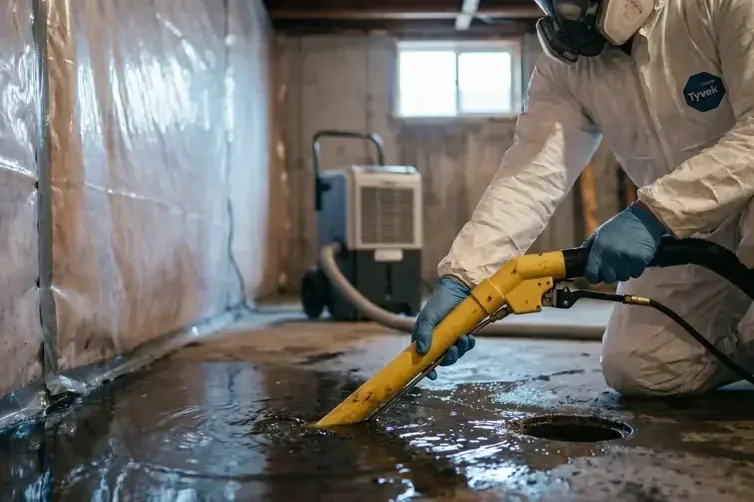
A pump handles depth, while an extraction wand or specialized floor tool handles the water left in accessible surfaces. The operator chooses a method suited to the material and water category. A household vacuum is not a substitute for equipment intended to recover water safely.
- Deep water requires an access and electrical assessment before a pump is introduced.
- Carpet extraction includes evaluating the padding and backing, not simply drying the pile.
- Hard surfaces receive checks at seams and edges where water can move below the finish.
- Cabinet bases and lower walls need measurements even when the middle of the room looks clear.
Where water removal ends and drying begins
Extraction removes free water. Dehumidifiers and air movers address moisture retained inside suitable materials. The first measurement establishes a baseline; follow-up readings show whether the drying plan is actually reducing moisture in the affected assembly. Equipment positioning changes when a hidden layer continues to hold water.
The structural drying service follows those readings. A room that contains sewage or outdoor floodwater also needs a contamination plan before ordinary airflow starts. Discolored water, an unknown source or a drain backup should be reported at the first conversation so the responding team can prepare appropriate controls.
Standing water around electrical equipment makes the area unsafe to enter. A homeowner should stay on dry ground and keep children and pets outside the room. Nobody should reach through water to unplug an appliance or operate a wet breaker panel. Emergency services or the utility may need to address an immediate electrical hazard before restoration access is possible.
Preserving the first condition and the final readings
Photographs before extraction help explain how far the water spread. The scope records affected surfaces, contamination and removal decisions. After extraction, the crew checks the perimeter rather than assuming the last visible puddle marked the edge of the loss. That inspection keeps concealed wetting from disappearing from the plan.
- Record the approximate discovery time and whether the water was still entering.
- Identify adjoining rooms with shared flooring or wet wall bases.
- Keep damaged items available for documentation when it is safe to do so.
- Use the cost calculator to compare planning factors, then confirm the actual measured scope with the contractor.
How the water extraction work progresses
Assess access and water
The crew checks the source and electrical conditions, identifies the category of water and records affected surfaces before introducing pumps or recovery equipment.
Remove the accessible load
Pumping and extraction reduce the standing water, with tools selected for the depth, floor covering and safe route through the building.
Measure remaining moisture
The technician checks lower walls, floor layers and cabinet edges, marking wet areas that remain after the visible water has been recovered.
Set the follow-on scope
The contractor explains drying equipment, necessary removals and documentation, so the owner understands the next stage before retained materials are closed or refinished.
Water Extraction coverage in Morrow
The restoration team covers ZIP codes 30260 and 30287, including properties along Jonesboro Road, Morrow Road, Southlake Parkway and Mt Zion Road. Dispatch reviews the affected rooms, safe access and the source of the water before the site assessment.
See the service areas and ZIP codesRelated water damage services

Water Extraction questions in Morrow
Can a household shop vacuum handle this?
A small appliance may remove visible water without addressing hazards or concealed saturation. Standing water near electricity and contaminated losses need professional assessment. Extraction equipment, disposal methods and drying checks must fit the actual source and surfaces.
Why check walls after the floor is clear?
Porous materials can absorb water above the visible floor level. The crew checks wall bases and adjacent finishes to find that hidden wetting. Those measurements establish the condition of retained materials before the building receives replacement finishes.
Does extraction include drying?
The services work together but perform different tasks. Extraction removes free water, while controlled airflow and dehumidification remove retained moisture from suitable materials. The contractor should describe both parts of the scope and how completion will be measured.
What if the source is a drain backup?
Report that detail immediately and avoid contact with the water. The crew assesses contamination and containment before removal. Sewage cleanup involves protective equipment, disposal decisions and surface cleaning that differ from a fresh supply-water loss.
Can furniture stay in the room?
The assessor checks whether contents obstruct extraction, retain water or can be protected in a dry area. Heavy or unstable items should remain untouched until safe handling is arranged. Photos preserve their condition before relocation.
When does the equipment come out?
Pumps leave after accessible water removal, while drying equipment may remain for subsequent stages. Material readings determine whether retained assemblies meet their drying goals. The owner receives an explanation of the measured result and any remaining repair needs.
Clear the water and check what remains
Morrow Water Damage Restoration provides 24/7 dispatch for extraction and measured drying decisions across affected homes and business spaces.
(888) 532-4616Talk through the extraction scope