Commercial Water Damage in Hapeville
A wet business space needs a cleanup boundary that staff can understand. Hapeville commercial restoration identifies affected rooms, protects usable access and coordinates source repair while inventory and building materials receive separate assessments.
(888) 532-4616Discuss the affected business space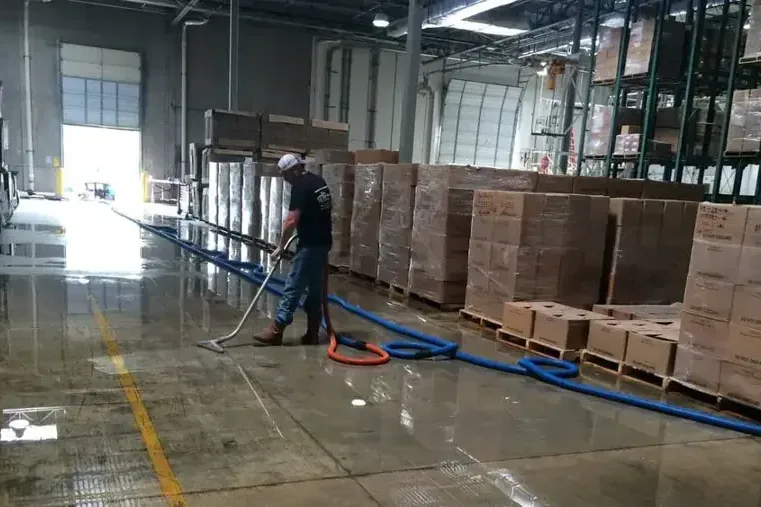
First steps for commercial water damage
- Identify the decision contact
A designated manager authorizes entry, repairs and material decisions, keeping instructions consistent while the team assesses the wet business area.
- Separate inventory records
Staff document exposed stock and equipment from safe positions, while the restoration team records wet finishes and assemblies as a distinct part of the loss.
- Explain operational access needs
The contact identifies essential passages, locked rooms and adjoining occupants so the cleanup route can be planned around actual property restrictions and safe working conditions.
- Coordinate source repair status
Plumbing, roofing or equipment findings are shared with the mitigation team, helping the drying plan account for any continuing water entry or unresolved repair requirement.
What does commercial water damage cost in Hapeville, GA?
Commercial water damage mitigation in Hapeville has planning ranges of $2,500 to $20,000+. Affected floor area, contents handling, access restrictions and material complexity shape the scope. Business equipment repair, inventory replacement and reconstruction should be separately identified where the agreement covers only building mitigation.
Limited business room
- Defined wet footprint
- Accessible floor removal
- Focused equipment setup
Multiple occupied spaces
- Coordinated room access
- Expanded contents handling
- Connected assembly checks
Large or complex loss
- Extensive wet materials
- Restricted operational routes
- Broader repair coordination
Water category, wet area, material class and the delay before drying change the total. The water damage cost calculator compares a planning range before an on-site assessment.
The commercial water damage process
- 1
Map the occupied property
The assessment identifies wet rooms, neighboring uses and authorization contacts, documenting source conditions and the access constraints that will shape the commercial cleanup sequence.
- 2
Establish workable cleanup zones
Removal routes, equipment positions and protected contents areas are agreed with the property contact so staff understand which spaces remain restricted while the work proceeds.
- 3
Address water and exposed materials
Extraction, cleaning and necessary removal follow the observed loss, with inventory concerns recorded separately and concealed moisture checked where adjoining finishes or tenant areas connect.
- 4
Communicate drying and repair status
Material readings and scope changes are reported to the designated contact, giving managers a documented basis for arranging reconstruction, equipment return and the next occupancy decisions.
Water across a workroom changes more than the condition of the floor. Staff access, stored goods, equipment connections and adjoining tenants may all affect how cleanup can proceed. The first assessment defines the wet footprint and identifies who can authorize entry, source repair and material decisions before equipment placement disrupts the normal arrangement of the property.
Start with the business space and its contacts
Hapeville's commercial setting includes the Porsche Service Center and the Porsche Classic Cars Restoration Facility. The Dwarf House is another established local business landmark. A commercial loss assessment focuses on the affected property itself, documenting its room use, stored materials and access controls before selecting a cleanup sequence suited to the actual building.
The city lists separate residential and commercial building-permit categories, alongside plumbing, mechanical and electrical categories. A manager planning repairs can discuss the proposed work with the appropriate city contact and contractors. Mitigation records should distinguish immediate water work from construction or equipment modifications that require their own project decisions.
Separate wet operations from usable space
A commercial floor can contain several activities with different access needs. The team considers equipment routes, stock locations and occupied adjoining areas when defining the work zone. Source control and safe electrical conditions remain essential; an apparently dry passage cannot justify leaving an unsafe wet room open to normal traffic.
- Inventory touching water needs a record separate from the building material scope.
- Shared walls and floor transitions may carry moisture into an adjacent tenancy.
- Hoses and drying units must leave agreed access routes understandable and usable.
- Locked service rooms require a designated contact before inspection can reach them.
Staff should avoid entering water around energized business equipment or moving exposed inventory through unaffected stock areas. The property manager needs to establish restricted areas and coordinate specialist safety assessment where required. Cleanup decisions should reflect actual access and contamination conditions before anyone assumes that routine operations can continue within the wet zone.
Make the restoration record useful to the manager
When liquid covers an accessible floor, commercially coordinated water extraction can be organized around the agreed working route. Contents handling and source repair proceed as distinct tasks, with photographs and location notes connecting each item or surface to the original affected area rather than a broad description of business damage.
Drying the retained building materials follows the prepared surfaces and occupancy restrictions. Progress updates should identify changes in access, additional wet assemblies and repair needs discovered during work. A clear handoff then allows the manager to coordinate reconstruction and equipment return using documented conditions, without relying on the disappearance of visible water as the sole basis for reopening affected rooms.
How the commercial water damage work progresses
Map the occupied property
The assessment identifies wet rooms, neighboring uses and authorization contacts, documenting source conditions and the access constraints that will shape the commercial cleanup sequence.
Establish workable cleanup zones
Removal routes, equipment positions and protected contents areas are agreed with the property contact so staff understand which spaces remain restricted while the work proceeds.
Address water and exposed materials
Extraction, cleaning and necessary removal follow the observed loss, with inventory concerns recorded separately and concealed moisture checked where adjoining finishes or tenant areas connect.
Communicate drying and repair status
Material readings and scope changes are reported to the designated contact, giving managers a documented basis for arranging reconstruction, equipment return and the next occupancy decisions.
Commercial Water Damage coverage in Hapeville
Commercial cleanup planning in Hapeville considers the affected property's room uses and management arrangements. Within ZIP 30354, a designated contact can describe operating restrictions, exposed inventory and access permissions so the inspection follows the actual business loss and building layout.
The same service nearby: commercial water damage in Morrow, Forest Park, Riverdale.
Water damage restoration in Hapeville · every town coveredRelated water damage services in Hapeville


Commercial Water Damage questions in Hapeville
Can part of the business remain occupied?
That depends on safe separation, contamination, electrical conditions and access needs. The property manager and restoration team should assess those factors before choosing work zones, rather than assuming every dry-looking room remains suitable for routine use.
Who should authorize commercial cleanup changes?
A designated owner or management contact helps coordinate scope decisions and access. When inspection reveals additional wet materials, the team can explain the finding to that person before the work affects another occupied or controlled area.
Are inventory losses included with building damage?
Inventory and building materials should have separate records because handling and replacement decisions differ. Photographs, locations and item descriptions help the manager coordinate stock concerns while mitigation focuses on exposed floors, walls and other assemblies.
Why inspect an adjoining tenant space?
Water can pass through shared interfaces or continuous flooring beyond the room where it first appears. Appropriate access and communication allow the inspection to follow actual moisture while respecting the neighboring occupant's separate space and permissions.
Does the mitigation scope include business equipment repair?
The written agreement should identify that explicitly. Specialized equipment servicing differs from water removal and structural drying, so managers need to know which contractor handles it before equipment is moved, tested or returned to operation.
What makes the closing record useful for reopening?
The record should identify treated areas, material condition, removed finishes and remaining repairs. Managers can then coordinate the appropriate safety, equipment and occupancy decisions using documented work rather than judging readiness solely by a clean-looking floor.
Coordinate restoration around a clear scope
Documented room boundaries and material conditions help the manager organize mitigation, remaining repairs and the next decisions about use of the affected business space.
(888) 532-4616Discuss business water recovery