Sewage Backup Cleanup in Lovejoy
A backed up drain changes how a wet room must be handled. Access restrictions, source investigation and protected removal come first, followed by decisions about contaminated contents and the building materials beneath them.
(888) 532-4616Discuss the contaminated room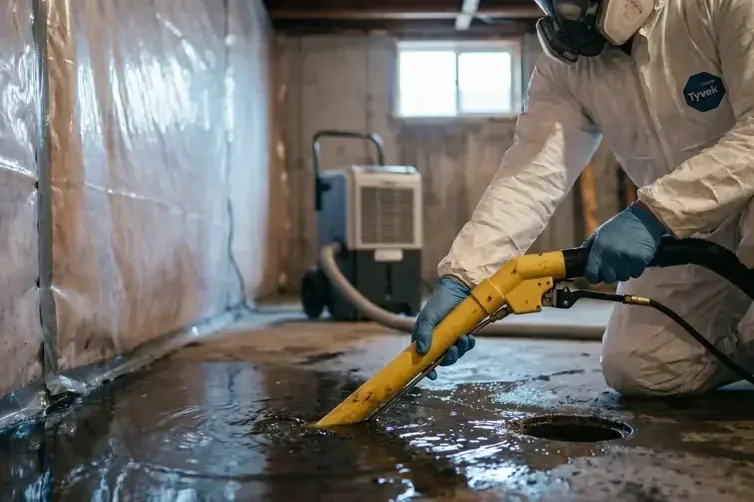
First steps for sewage backup cleanup
- Set a clean access boundary
People and pets should remain outside contamination. Avoid using the affected room as a route through the building until safe access is established.
- Limit use feeding the backup
The source needs assessment before additional fixture use sends water into the same drain. Report which fixtures are affected and whether the water continues rising.
- Document without handling contents
Safe photographs and an inventory can preserve information about damaged belongings. Wet absorbent items need controlled handling rather than movement into unaffected rooms for sorting.
- Arrange source and cleanup coordination
Drain repair findings establish whether the release is controlled. Keep those findings available so protected removal and material recovery proceed with the source status understood.
What does sewage backup cleanup cost in Lovejoy, GA?
Sewage backup cleanup in Lovejoy depends on contamination spread, absorbent materials and the access needed for removal and cleaning. These ranges concern mitigation. Drain correction and replacement finishes should appear as separate scope items when the full recovery is priced.
Contained bathroom backup
- Limited contaminated footprint
- Accessible hard surfaces
- Focused protected removal
Multiple contaminated surfaces
- Absorbent material decisions
- Expanded cleaning work
- Additional contents handling
Extensive sewage migration
- Connected cavity exposure
- Broad controlled removal
- Complex drying access
Water category, wet area, material class and the delay before drying change the total. The water damage cost calculator compares a planning range before an on-site assessment.
The sewage backup cleanup process
- 1
Define contaminated movement paths
The mitigation team establishes which rooms and materials the backup reached, considering tracked water as well as the original accumulation and preserving a clean approach for work.
- 2
Remove liquid under protection
Equipment and handling methods are selected for contaminated water, while the source status is reviewed to reduce the chance of renewed backup during the removal work.
- 3
Separate recovery from disposal
Affected materials are assessed individually for appropriate cleaning or removal. Retained surfaces receive treatment before drying equipment is used within the established work area.
- 4
Document the retained assembly
Moisture progress and completed cleaning work are recorded together, with remaining finish repairs and unresolved drain concerns identified before the space returns to its ordinary use.
Sewage appearing indoors in Lovejoy needs a controlled boundary before anyone starts carrying belongings out of the room. Shoes, tools and wet contents can spread contamination into otherwise usable space. The cleanup plan considers the drain problem, the water's route and each material it contacted, rather than treating the event as an ordinary floor spill.
Identify the drainage problem separately
Clayton County Water Authority provides sewer service locally. A backup affecting an indoor fixture needs investigation of the actual blockage or system problem, with the appropriate repair contact determined from the findings. Continued water use can feed an unresolved backup. The cleanup team needs to know whether flow has stopped and whether more than one fixture is affected.
A property report near Hastings Bridge Road, Steele Road or Tara Boulevard should include the affected entrance and any dry route around the room. Location details help arrange access, while contamination boundaries determine movement inside. Information about water returning after a flush or drain use can help the source investigation without requiring further test use by the occupant.
Make material decisions before moving air
Absorbent finishes can hold contaminated water below a surface that appears washable. The assessment considers carpet backing, wallboard, cabinet panels and other layers in the actual path. Suitable hard surfaces may be cleaned through a controlled process; materials that cannot be recovered require removal and appropriate handling rather than simply drying them in place.
- Keep children, pets and unnecessary foot traffic outside the affected room.
- Avoid carrying wet rugs or textiles through clean living areas.
- Record damaged belongings from a safe position before disposal changes the scene.
- Leave cleaning products unmixed and avoid improvised chemical treatment.
Occupants should avoid contact with sewage and should not operate household fans in the contaminated space. Electrical hazards may also be present. Entry and equipment use require a protected work plan that addresses contaminated surfaces and prevents spreading material beyond the damaged area.
Recover the room in a controlled sequence
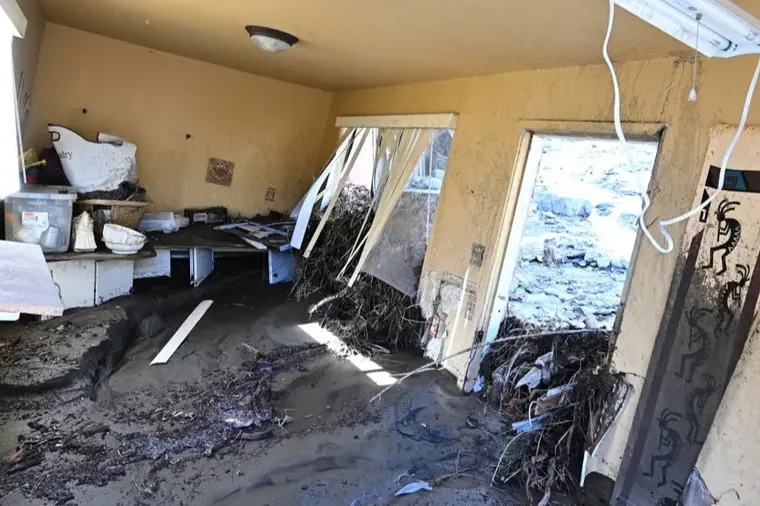
Liquid removal is followed by material evaluation and cleaning of retained surfaces. Floor edges and wall bases deserve attention because a shallow backup can still enter concealed joints. Where outside water also entered, storm flood cleanup may add sediment handling to the scope.
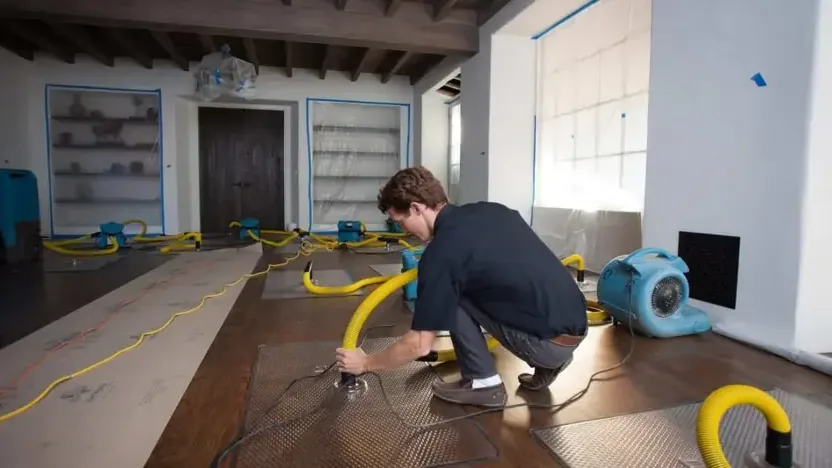
Once removal and cleaning establish suitable conditions, structural drying addresses moisture in the remaining assembly. The final record should identify the contaminated footprint, removed materials and the work completed before finish replacement. Source repair findings belong with that record so the owner can distinguish a functioning drain from completion of the room's recovery.
How the sewage backup cleanup work progresses
Define contaminated movement paths
The mitigation team establishes which rooms and materials the backup reached, considering tracked water as well as the original accumulation and preserving a clean approach for work.
Remove liquid under protection
Equipment and handling methods are selected for contaminated water, while the source status is reviewed to reduce the chance of renewed backup during the removal work.
Separate recovery from disposal
Affected materials are assessed individually for appropriate cleaning or removal. Retained surfaces receive treatment before drying equipment is used within the established work area.
Document the retained assembly
Moisture progress and completed cleaning work are recorded together, with remaining finish repairs and unresolved drain concerns identified before the space returns to its ordinary use.
Sewage Backup Cleanup coverage in Lovejoy
Sewage cleanup planning in 30250 needs the fixture location, affected rooms and a dry entry route. Properties reached from Hastings Bridge Road or Steele Road can be discussed with those details and the current status of the backing drain.
The same service nearby: sewage backup cleanup in Morrow, Stockbridge, Riverdale.
Water damage restoration in Lovejoy · every town coveredRelated water damage services in Lovejoy

Sewage Backup Cleanup questions in Lovejoy
Can a clear looking backup still require sewage precautions?
The drain source and contacted materials determine handling, not the water's appearance. A backup may contain contamination even when solids are not obvious. The affected area needs assessment before occupants clean surfaces or move wet contents into other rooms.
Should other fixtures continue operating during a backup?
Additional water use may feed an unresolved drainage problem. The appropriate source assessment should establish restrictions and the cause. Reporting which fixtures are affected is useful; repeated flushing to test the problem can add more water to the room.
Does a disinfectant replace material removal?
A surface treatment cannot recover every absorbent material or reach contamination concealed within layers. The cleanup scope must consider material composition, exposure and access. Some surfaces can remain after treatment, while others need removal to recover the surrounding assembly.
Can ordinary fans speed the cleanup?
Fans should not be placed casually in a contaminated room. Air movement can spread unwanted material before surfaces are treated, and wet electrical conditions add risk. Protected removal and appropriate cleaning come before the controlled drying equipment plan.
Who should assess a sewer service problem?
Clayton County Water Authority provides sewer service here. The actual cause of the backup needs investigation so the responsible repair party can be identified. Indoor contamination and damaged materials still require their own mitigation assessment after source control.
What should the completed work record contain?
The record should identify contaminated areas, material removals, cleaning work and moisture findings for retained components. Source repair information and remaining reconstruction needs should be kept alongside it, preserving the distinction between clearing the drain and recovering the room.
Plan the room recovery after the backup
Protected removal, material decisions and drying need coordination with the drain repair. Discuss the current conditions before entering or handling wet belongings.
(888) 532-4616Discuss protected sewage removal