Roof Leak Water Damage in Hapeville
A roof opening and an indoor stain may sit in different places. Hapeville roof leak cleanup follows the water between them, checking insulation and ceiling edges while a roofing professional addresses the exterior entry point.
(888) 532-4616Discuss rain inside the room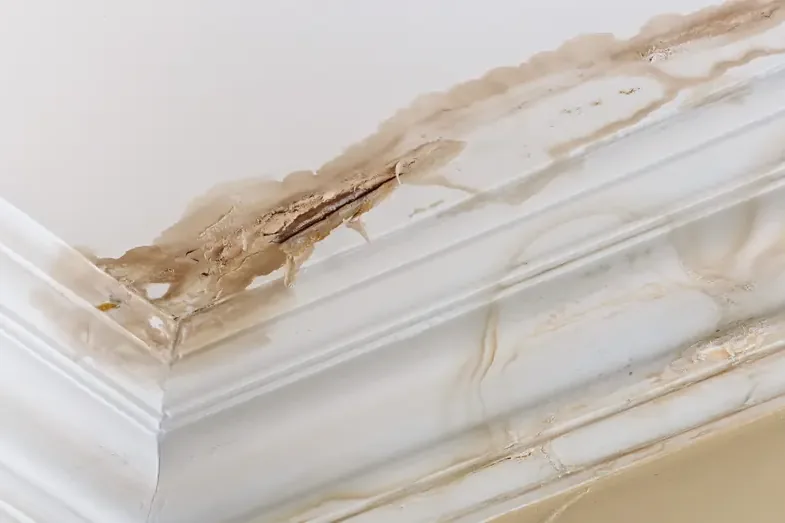
First steps for roof leak water damage
- Record the rain relationship
The property contact notes whether staining or dripping changes with rainfall and preserves photographs of the affected room from a position away from overhead hazards.
- Arrange exterior source assessment
A roofing professional evaluates the entry point while the mitigation team organizes access to interior damage without asking occupants to inspect the roof themselves.
- Protect unaffected possessions
Contents outside the drip area remain separated from wet belongings, and the crew plans safe handling for items beneath the affected ceiling or wall.
- Identify attic restrictions
Known access openings, occupied rooms and any unsafe ceiling conditions are described before inspection so the team can plan a suitable route to wet materials.
What does roof leak water damage cost in Hapeville, GA?
Hapeville roof leak interior cleanup has a planning range of $1,000 to $5,500+. The estimate depends on attic access, wet insulation and damage reaching additional rooms. Roof repairs and replacement interior finishes should be listed separately when outside the mitigation agreement.
Limited ceiling wetting
- Small interior footprint
- Accessible ceiling edges
- Limited contents protection
Attic and ceiling loss
- Wet insulation handling
- Framing moisture inspection
- Controlled overhead access
Several affected rooms
- Multiple descending paths
- Expanded interior removal
- Separate drying locations
Water category, wet area, material class and the delay before drying change the total. The water damage cost calculator compares a planning range before an on-site assessment.
The roof leak water damage process
- 1
Connect marks with wet surfaces
The assessment compares reported rain entry with accessible attic and ceiling conditions, tracing moisture through the assembly rather than using the stain as its boundary.
- 2
Coordinate source and access work
Roof repair arrangements and interior openings are discussed together so retained materials can dry without being exposed repeatedly to water entering through an unresolved defect.
- 3
Treat affected overhead materials
Damaged finishes and insulation receive condition-based handling, while the remaining surfaces become accessible for moisture measurements and equipment placement within the workable drying area.
- 4
Prepare a clear repair handoff
The record identifies retained materials, completed drying checks and remaining reconstruction needs so the owner can schedule ceiling, wall or trim restoration with an understandable scope.
A ceiling stain that grows during rain gives the inspection a useful timeline. It still takes an examination above the room to connect that stain with wet roof framing, insulation or another surface carrying water. The mitigation scope follows the interior damage, while the roofing scope addresses how rain entered and how that opening will be repaired.
Begin with the interior path of rainfall
Hapeville's historic residential neighborhoods include different individual buildings with their own altered finishes and access conditions. Around Virginia Park, a roof leak assessment should identify the existing attic arrangement before proposing equipment or removal. A confined wet pocket above a room presents a different task from water descending through an open wall cavity.
The Hapeville Historic District is listed on the National Register of Historic Places. Where an affected property has older decorative finishes, the restoration discussion can identify those materials before access work begins. The crew records which surfaces are wet and discusses practical opening options with the owner instead of treating all trim or ceiling sections alike.
Check the materials between roof and room
Water can follow framing before reaching a ceiling edge, leaving some insulation wet and other nearby surfaces relatively unaffected. Central Avenue provides a familiar local reference for the property conversation; photographs and readings inside the building supply the working details. The scope should reflect those findings rather than the size of the stain alone.
- Insulation can obstruct inspection of framing and hold water above ceiling finishes.
- Ceiling perimeter marks may lead toward a wet wall top or cavity.
- Drips onto furniture introduce contents handling beyond the overhead repair itself.
- Repeated entry needs source control before newly dried surfaces are enclosed.
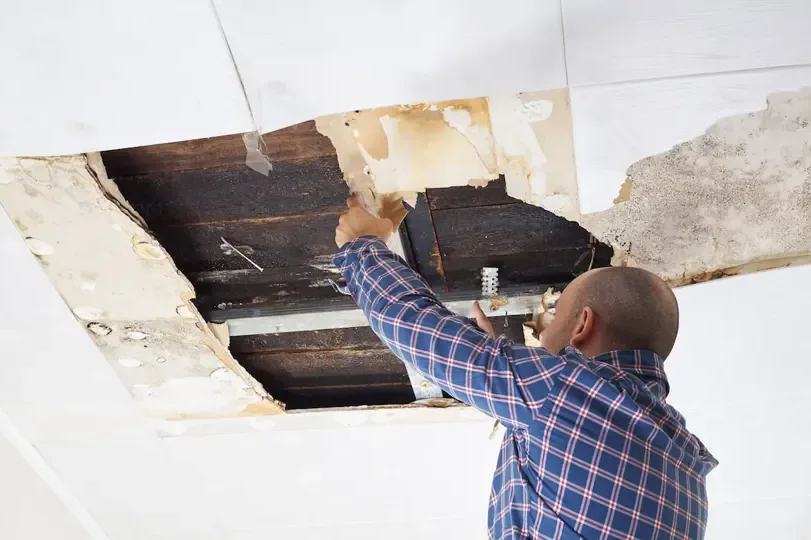
Occupants should not climb onto a wet roof or enter an attic with uncertain footing to investigate a leak. Ceiling panels are not walking surfaces, and water near wiring needs specialist attention. The affected room should remain restricted when sagging materials or electrical exposure make conditions unsafe below the suspected entry path.
Connect exterior repair with interior completion
A roofing repair can stop new rain without removing moisture already in insulation or framing. Ceiling cavity cleanup addresses the overhead materials that need removal or access, while repair notes establish which exterior work was completed. Keeping those records together helps explain why interior mitigation may continue afterward.
The remaining assembly receives monitored drying appropriate to its accessible surfaces. Before decoration or enclosure, the owner should understand which materials were retained, which were removed and whether any wet areas still require attention. The final repair plan can then focus on replacing finishes over an assembly whose condition has been checked rather than merely hidden from view.
How the roof leak water damage work progresses
Connect marks with wet surfaces
The assessment compares reported rain entry with accessible attic and ceiling conditions, tracing moisture through the assembly rather than using the stain as its boundary.
Coordinate source and access work
Roof repair arrangements and interior openings are discussed together so retained materials can dry without being exposed repeatedly to water entering through an unresolved defect.
Treat affected overhead materials
Damaged finishes and insulation receive condition-based handling, while the remaining surfaces become accessible for moisture measurements and equipment placement within the workable drying area.
Prepare a clear repair handoff
The record identifies retained materials, completed drying checks and remaining reconstruction needs so the owner can schedule ceiling, wall or trim restoration with an understandable scope.
Roof Leak Water Damage coverage in Hapeville
Roof leak mitigation in Hapeville addresses interior materials in the affected building. Properties in ZIP 30354 receive planning based on attic access, observed ceiling damage and source repair coordination, with the actual wet route determining the work area.
The same service nearby: roof leak water damage in Morrow, Forest Park, Riverdale.
Water damage restoration in Hapeville · every town coveredRelated water damage services in Hapeville

Roof Leak Water Damage questions in Hapeville
Does a stain always sit directly beneath roof entry?
Water may follow framing or another surface before dropping onto the ceiling. The inspection therefore considers the route above the room and does not restrict the search to the point directly over the visible mark.
Can roof repair and interior drying overlap?
They can be coordinated when working conditions permit, but drying needs protection from renewed entry. The team should understand the source repair status and explain how interior work is sequenced around that requirement.
Why does wet attic insulation matter?
Insulation can hold water against surrounding materials and obstruct useful inspection or airflow. Its condition and exposure determine whether it remains suitable in place or needs handling before the underlying assembly can be addressed.
Should an owner walk through the attic to investigate?
An attic may have unsafe footing and concealed electrical exposure. An occupant should describe known access and visible symptoms from a safe location while appropriate professionals determine how to reach and inspect the wet area.
Will old decorative trim automatically be discarded?
Trim is assessed by its actual material condition, exposure and access needs. The scope can distinguish retained pieces from damaged sections requiring replacement, with removal decisions explained before work affects the surrounding finishes.
What needs checking before repainting a ceiling?
The source should be addressed and the affected cavity assessed for remaining moisture. Damaged materials need appropriate repair, and records should explain the drying condition before fresh paint covers marks left by the leak.
Dry the materials beneath the repaired roof
Restoration follows wet insulation, framing and finishes through the building so a repaired roof is matched by an interior ready for its next repair stage.
(888) 532-4616Discuss interior roof leak work