Ceiling Leak Water Damage in Hapeville
A growing ceiling mark puts the room below into question before the source is visible. In Hapeville houses, townhomes and apartments, cleanup starts by assessing overhead stability and finding what is wet above it.
(888) 532-4616Discuss the overhead wet area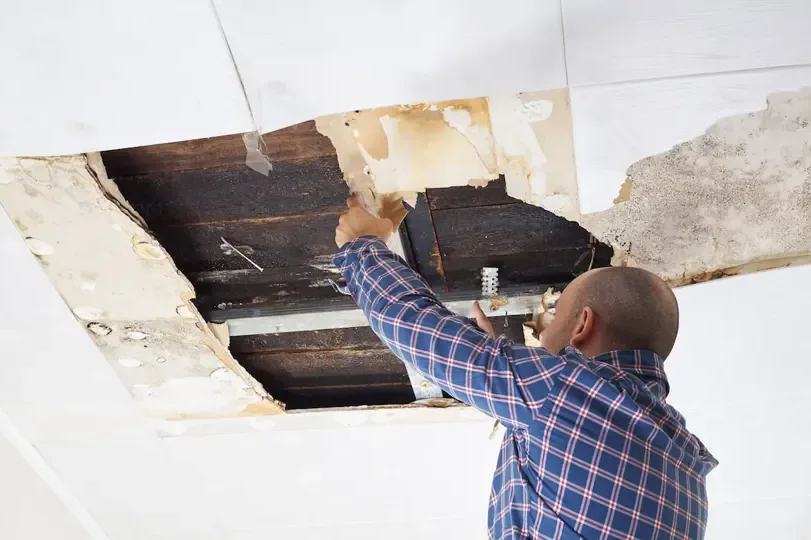
First steps for ceiling leak water damage
- Clear the overhead exposure
Occupants stay out of the area beneath bulging or loose ceiling material and prevent children or pets from entering until conditions are assessed.
- Describe the room above
The property contact identifies an upper bathroom, appliance space or roof area when known, helping the inspector arrange access to likely source locations.
- Notify adjoining occupants
Management coordinates relevant rooms in an apartment or townhome so source investigation and ceiling access can proceed with appropriate permission and communication.
- Preserve visible changes
Photographs taken without standing beneath the damage record stain growth, dripping locations and affected possessions before controlled opening alters the appearance of the ceiling.
What does ceiling leak water damage cost in Hapeville, GA?
Ceiling leak mitigation in Hapeville has planning ranges of $800 to $4,500+. Overhead access, insulation condition and spread into walls affect the scope. Source repair, replacement ceiling finishes and electrical work should be clearly identified when priced outside cleanup.
Small ceiling area
- Limited overhead wetting
- Accessible material checks
- Focused room protection
Wet ceiling cavity
- Insulation handling needs
- Controlled overhead opening
- Cavity drying access
Ceiling and walls
- Descending moisture path
- Expanded surface assessment
- Connected drying zones
Water category, wet area, material class and the delay before drying change the total. The water damage cost calculator compares a planning range before an on-site assessment.
The ceiling leak water damage process
- 1
Assess the overhead assembly
The team checks visible deformation and nearby electrical exposure, then defines a working area that protects occupants and contents from the damaged ceiling section.
- 2
Trace water above the stain
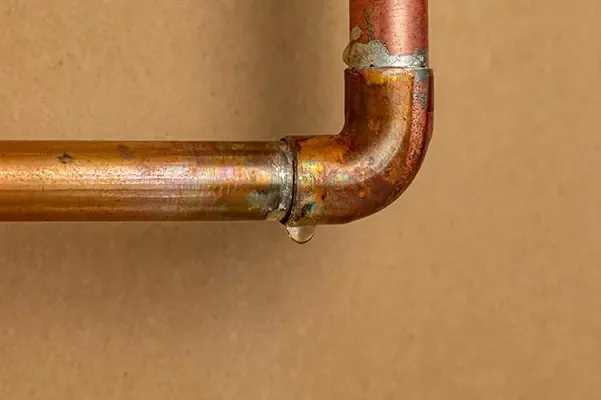
Access to the upper space helps connect moisture patterns with the source, while repair coordination addresses plumbing or roof entry before finishes are restored.
- 3
Expose what needs attention
Unsound ceiling material and affected insulation are handled according to their condition, leaving serviceable surfaces accessible for moisture measurement and effective controlled air movement.
- 4
Assess the cavity before closure
Recorded checks cover remaining framing, wall tops and other connected surfaces, with unresolved source or repair issues identified before replacement ceiling work is scheduled.
Ceiling water often becomes visible at a joint or fixture opening after traveling across a concealed surface. A stain can therefore sit away from the source. The inspector considers the room above, any nearby plumbing and the overhead assembly, while checking whether the occupied space below can remain safely accessible during the assessment.
Coordinate both sides of the ceiling
Hapeville includes apartments and townhomes as well as single-family construction. When another occupied space sits above the damage, property management may need to arrange access before anyone can trace the release properly. The wet ceiling and the source room belong in the same investigation, even when separate occupants first report them.
Virginia Park and the Hapeville Historic District are local residential references. For an affected home in either setting, the assessment records the actual ceiling finish and available access. Plaster, wallboard, insulation and trim can present different handling needs; the property's age or location does not substitute for examining those materials.
Read the pattern without disturbing unstable areas
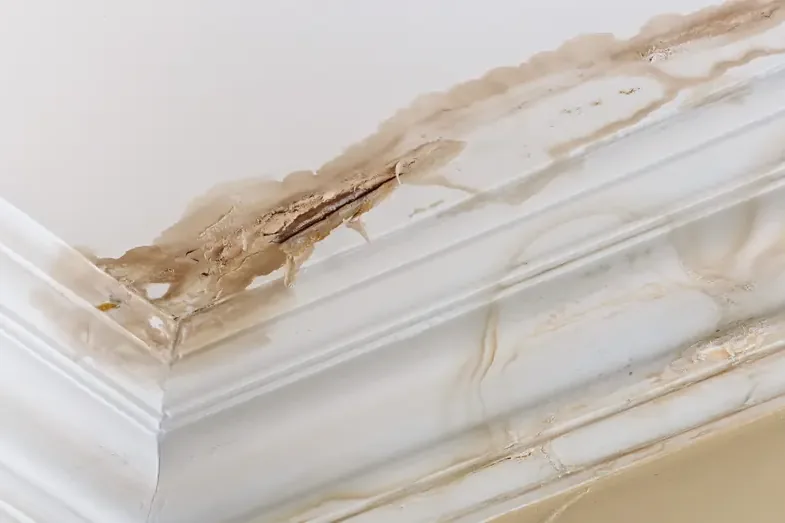
A water track near crown molding, a swollen joint and a dripping fixture each direct attention to different access points. At a property on Dogwood Drive, the useful description includes where the mark starts and whether it changes during plumbing use or rainfall. Photographs from a protected position preserve those observations.
- Softened ceiling panels need assessment before movement underneath the affected span.
- Wet insulation above a panel can keep adjacent framing exposed to moisture.
- Wall tops may need checking where water escapes the ceiling perimeter.
- Floor coverings below a drip can become a separate cleanup area.
Nobody should puncture a bulging ceiling or operate a wet light fixture to test the damage. People and pets should remain clear of the affected room until overhead and electrical conditions are assessed. Catching drips is secondary to keeping occupants away from unstable materials and equipment exposed to water.
Close the cavity only after the wet path is addressed
Opening an overhead assembly should have a stated reason, such as removing unsound material, reaching saturated insulation or exposing a surface that cannot otherwise dry. If inspection identifies rain entering from above, roof leak interior cleanup can be coordinated with the roofing repair needed to stop further entry.
The remaining framing and adjacent surfaces then need controlled structural drying. The scope should include checking the room below, protecting contents and documenting material condition before replacement work begins. A finished patch is the last visible step; the owner should first understand what happened above it, how the source was resolved and which observations support closing the assembly.
How the ceiling leak water damage work progresses
Assess the overhead assembly
The team checks visible deformation and nearby electrical exposure, then defines a working area that protects occupants and contents from the damaged ceiling section.
Trace water above the stain
Access to the upper space helps connect moisture patterns with the source, while repair coordination addresses plumbing or roof entry before finishes are restored.
Expose what needs attention
Unsound ceiling material and affected insulation are handled according to their condition, leaving serviceable surfaces accessible for moisture measurement and effective controlled air movement.
Assess the cavity before closure
Recorded checks cover remaining framing, wall tops and other connected surfaces, with unresolved source or repair issues identified before replacement ceiling work is scheduled.
Ceiling Leak Water Damage coverage in Hapeville
Ceiling assessments in Hapeville account for access above and below the affected assembly. Within ZIP 30354, property managers and homeowners can describe occupied rooms, upper floor access and any restrictions that influence safe investigation of overhead moisture.
The same service nearby: ceiling leak water damage in Morrow, Forest Park, Riverdale.
Water damage restoration in Hapeville · every town coveredRelated water damage services in Hapeville

Ceiling Leak Water Damage questions in Hapeville
Can a small stain conceal a larger wet area?
Water can travel above the ceiling before appearing at a joint or opening. The inspection follows that path and checks nearby surfaces, so the visible mark does not set the entire cleanup boundary.
Should a bulging ceiling be drained by an occupant?
A bulge may involve unstable materials and nearby electrical components. Occupants should remain clear and arrange assessment rather than puncturing it, because an improvised opening can release water and debris unpredictably into the room.
What if the leak comes from another apartment?
The property manager should coordinate access to both spaces and document each report. Source repair above and material cleanup below need connected planning, even when the wet rooms belong to different occupants or lease areas.
Does ceiling cleanup include the wet floor below?
The inspection should address water that landed beneath the leak as well as moisture overhead. Flooring, furnishings and wall edges may require separate extraction or drying tasks that belong in the written scope.
Can paint cover the mark after dripping stops?
The cavity can remain wet after a drip stops. Source repair and moisture assessment should come before decoration, with softened materials or retained wet insulation addressed before a new finish is applied.
How does the owner track overhead drying progress?
The team can record material readings and the condition of accessible framing or ceiling edges. Those observations support equipment adjustments and explain when the cavity is ready for the contractor handling replacement finishes.
Make the room below usable again
Ceiling cleanup needs a safe working area, a resolved source and a clear account of the materials that remain wet above the room.
(888) 532-4616Assess overhead cleanup needs