Ceiling Leak Water Damage in Forest Park
A ceiling drip needs attention above the stain as well as below it. Forest Park restoration evaluates overhead materials, the source room and adjoining surfaces before deciding how the ceiling can be dried.
(888) 532-4616Discuss the overhead water damage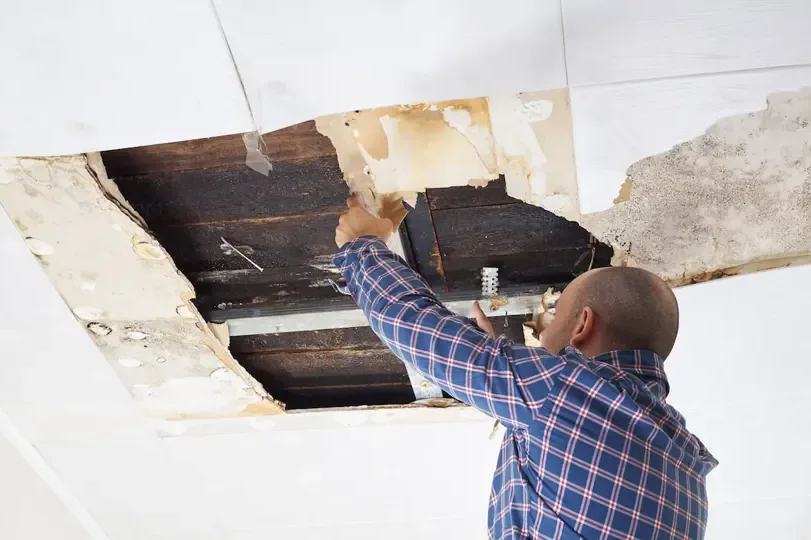
First steps for ceiling leak water damage
- Keep people clear below
The room should remain restricted where sagging, cracking or dripping creates an overhead hazard, with occupants using an unaffected route around the damage.
- Notify the upper contact
A property manager can arrange access to the room above and establish whether a shared fixture or neighboring unit needs immediate inspection.
- Describe stain movement
Safe photographs and room names help show whether the wet mark is growing toward a wall, light fitting or adjoining ceiling section.
- Wait before patching
Painting or closing the opening should follow source control and evaluation of retained materials, including any insulation holding moisture above the visible surface.
What does ceiling leak water damage cost in Forest Park, GA?
Ceiling leak cleanup in Forest Park has a planning range of $800 to $4,500+. Overhead access, wet insulation and water reaching walls affect the scope. The estimate should distinguish restoration work from source repairs and the final ceiling finish.
Small ceiling area
- Localized overhead wetting
- Accessible room below
- Limited finish damage
Wet ceiling cavity
- Insulation condition checks
- Controlled cavity opening
- Framing moisture management
Ceiling and walls
- Descending moisture paths
- Expanded surface evaluation
- Multiple repair boundaries
Water category, wet area, material class and the delay before drying change the total. The water damage cost calculator compares a planning range before an on-site assessment.
The ceiling leak water damage process
- 1
Assess overhead stability
The inspection begins with safe access beneath the damage, identifying sagging sections, electrical involvement and the conditions needed before a ceiling opening is considered.
- 2
Trace water from above
Access to the upper room or roof space helps establish the source route and the extent of materials affected before moisture became visible below.
- 3
Treat the accessible cavity
Damaged finishes and insulation are evaluated for removal, while the remaining assembly receives a drying plan suited to its exposure and available air pathways.
- 4
Explain the closure conditions
The owner receives information about retained materials, moisture results and outstanding source or finish repairs so the ceiling is closed only after the necessary work.
A swollen patch overhead changes how a room should be used. Furniture directly beneath the damage may need to stay untouched until the ceiling is assessed, and occupants need a dry route around the area. The first useful information is whether dripping continues, what sits above the ceiling and whether anyone can safely access that upper space.
Coordinate inspection across the shared ceiling
The mix of single family and multifamily housing in Forest Park makes access planning important. In an apartment, a leak may require entry to a neighboring unit before the source becomes visible. The property manager should know which ceiling is affected and whether the upper occupant has observed a fixture spill or plumbing problem.
Main Street, Forest Parkway and Bill Lee Park can help identify the property location during scheduling. Inside the building, the assessment needs a more precise description: the affected room, the upper room layout and the direction of any spreading stain. Those details support inspection of the ceiling assembly rather than a patch limited to its most noticeable mark.
Look past the painted surface
Paint can conceal damp wallboard until a seam opens or the finish bubbles. The restoration team evaluates the face, the cavity and adjoining wall tops. Saturated insulation can hold water above an apparently improved surface. Controlled access may be needed to remove damaged material and allow the retained framing to release moisture.
- Identify soft or sagging sections before anyone works beneath the ceiling.
- Check wall corners where water can descend beyond the original overhead stain.
- Inspect the floor below when dripping has soaked rugs or furniture.
- Keep source repair openings available until the cavity assessment is complete.
A bulging ceiling should not be punctured by an occupant. Stored water and weakened material can fall unexpectedly, and concealed wiring may be involved. Light fittings beneath a leak should remain unused until electrical safety is assessed. Entry beneath visibly unstable material should wait for a qualified assessment and a controlled removal plan.
Plan drying before the final finish
The source may require burst pipe cleanup or another related scope, while the ceiling itself needs decisions about retention and access. Opening a damaged section can reveal where moisture traveled, but it should be followed by evaluation of neighboring retained material rather than an immediate replacement patch.
During structural drying, readings from the assembly help determine whether drying is progressing. The handoff should identify remaining ceiling repairs, dry retained framing and any upper floor work that is still unfinished. Cosmetic staining can be addressed after that sequence, when the source has been resolved and the materials are ready for closure.
How the ceiling leak water damage work progresses
Assess overhead stability
The inspection begins with safe access beneath the damage, identifying sagging sections, electrical involvement and the conditions needed before a ceiling opening is considered.
Trace water from above
Access to the upper room or roof space helps establish the source route and the extent of materials affected before moisture became visible below.
Treat the accessible cavity
Damaged finishes and insulation are evaluated for removal, while the remaining assembly receives a drying plan suited to its exposure and available air pathways.
Explain the closure conditions
The owner receives information about retained materials, moisture results and outstanding source or finish repairs so the ceiling is closed only after the necessary work.
Ceiling Leak Water Damage coverage in Forest Park
Ceiling assessments near Main Street, Forest Parkway and Bill Lee Park require details about the affected room and access above it. In shared buildings, the responsible manager can coordinate entry and permissions before concealed areas are opened.
The same service nearby: ceiling leak water damage in Morrow, Hapeville, Riverdale.
Water damage restoration in Forest Park · every town coveredRelated water damage services in Forest Park

Ceiling Leak Water Damage questions in Forest Park
Should a bucket be placed beneath every drip?
A container can catch water only when the area is safe to approach. Sagging drywall, electrical contact or unstable overhead material changes the priority to keeping people out until the room has been assessed.
Why is access above the stain needed?
The source may sit beyond the visible mark, and water can move along framing before dripping. Upper access helps identify the active leak and inspect materials that cannot be evaluated from the painted face alone.
Can wet insulation remain above the ceiling?
Its condition, contamination and ability to dry determine the decision. Saturated insulation can conceal water and interfere with access, so the proposed scope should explain whether it can remain or requires removal for effective restoration.
Does the whole ceiling need replacement?
The assessment establishes the damaged and wet boundaries. Localized opening may be adequate in some assemblies, while broader deterioration or concealed moisture may require more access before the retained sections can be dried and repaired.
Who handles permission in a shared building?
The owner or property manager usually coordinates access and authorizes building work. Early contact helps arrange the upper inspection and keeps tenants informed about room restrictions or temporary changes during the ceiling cleanup process.
When can the stain be painted?
Painting follows source repair and evaluation of the ceiling materials. A dry looking surface alone is insufficient when the cavity remains damp; the finish work should wait until the retained assembly is ready for closure.
Address the cavity behind the stain
Overhead damage needs a clear source assessment and a drying plan before patching. Start with the affected room and any visible sagging.
(888) 532-4616Arrange an overhead damage assessment