Structural Drying in Forest Park
A room that feels dry can still contain damp framing. Forest Park structural drying follows material readings, adjusts the room environment and checks concealed layers before equipment removal or finish replacement.
(888) 532-4616Discuss retained building moisture
First steps for structural drying
- Explain what has already happened
The owner can describe source repair, water removal and any material demolition so the drying assessment begins with a clear picture of the retained wet assembly.
- Keep the equipment area usable
Dry access routes and space around machines allow safe movement and monitoring, while stored contents should remain clear of the airflow intended for affected surfaces.
- Report changes in conditions
New dripping, a returning puddle or unexpected equipment shutdown should be reported because these changes can alter the moisture load and the planned drying environment.
- Coordinate the repair schedule
Replacement finishes should wait for the material assessment, allowing the drying team and repair trade to establish readiness before openings or supporting layers are concealed.
What does structural drying cost in Forest Park, GA?
Structural drying in Forest Park has a planning range of $1,000 to $6,000+. Material density, concealed layers, room access and monitoring needs affect the scope. The estimate should explain equipment use and access work in relation to the retained wet assemblies.
One accessible room
- Open wet surfaces
- Simple equipment arrangement
- Localized progress readings
Several wet assemblies
- Connected material types
- Multiple monitoring locations
- Adjusted drying conditions
Dense or concealed materials
- Restricted moisture pathways
- Selective cavity access
- Extended assembly assessment
Water category, wet area, material class and the delay before drying change the total. The water damage cost calculator compares a planning range before an on-site assessment.
The structural drying process
- 1
Establish the initial condition
The drying team records affected materials and comparison readings, identifying layers still wet after extraction and the access available for effective moisture removal.
- 2
Build the drying environment
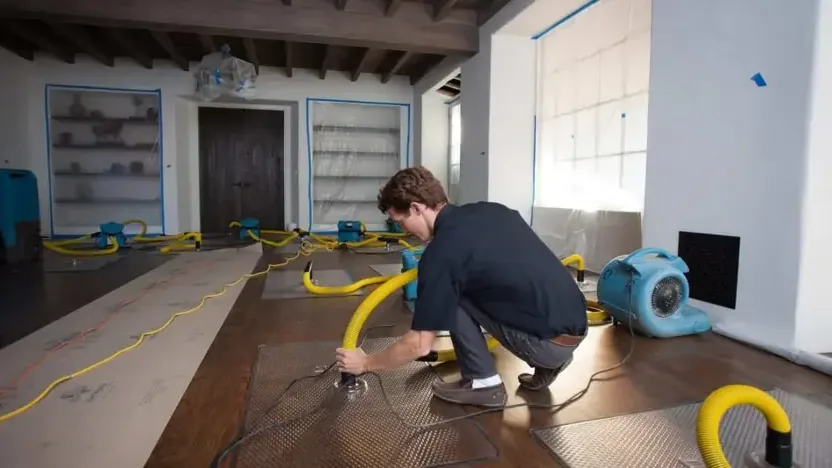
Air movement and dehumidification are arranged around the retained assembly, with power and occupied routes considered so equipment can function safely throughout the work.
- 3
Evaluate the measured response
Repeated checks compare progress at relevant locations, prompting changes to access, equipment or source investigation where moisture remains elevated or a section stops responding to the planned approach.
- 4
Document the completion decision
Final readings and material condition support the drying handoff, with remaining physical damage or installation requirements identified for the owner and the trade responsible for rebuilding the affected area.
Drying equipment should have a defined purpose in each affected room. An air mover supports evaporation at a wet surface, while a dehumidifier removes moisture from the surrounding air. Their placement and continued use should relate to the materials that remain damp, the available air pathways and the readings collected as the work progresses.
Set goals for the materials that remain
For premises along Main Street, the assessment identifies retained wall, floor and ceiling assemblies before setting a drying approach. A residence near Starr Park may have a different room layout or access constraint. Bill Lee Park offers another scheduling reference, while the actual material construction determines where readings need to be taken.
An unaffected comparison area can help establish a practical reference for the same material. Measurements should be interpreted with the assembly and the intended repair in mind. Surface readings, room humidity and visible condition provide different information; together they support decisions about equipment placement, selective access and whether a wet layer has been overlooked.
Respond when progress changes
A stubborn wet section can reflect trapped water, restricted airflow or another source still feeding the assembly. The drying team investigates those possibilities and adjusts the plan. Adding equipment without examining the reason for slow progress can leave the underlying access problem unresolved. Records should connect each meaningful change to what the material readings show.
- Keep air pathways clear around equipment and exposed wet surfaces.
- Check cavities or supporting layers that cannot release moisture through sealed finishes.
- Revisit previously measured locations so progress can be compared meaningfully.
- Identify new wetting that may require source repair rather than equipment adjustment.
Equipment placement needs safe power and unobstructed routes through occupied areas. Occupants should avoid moving machines, covering intake openings or changing the planned room conditions without discussing it with the drying team. Contaminated water damage requires appropriate removal and cleaning before ordinary drying airflow is introduced across the affected materials.
Use the endpoint to support repair work
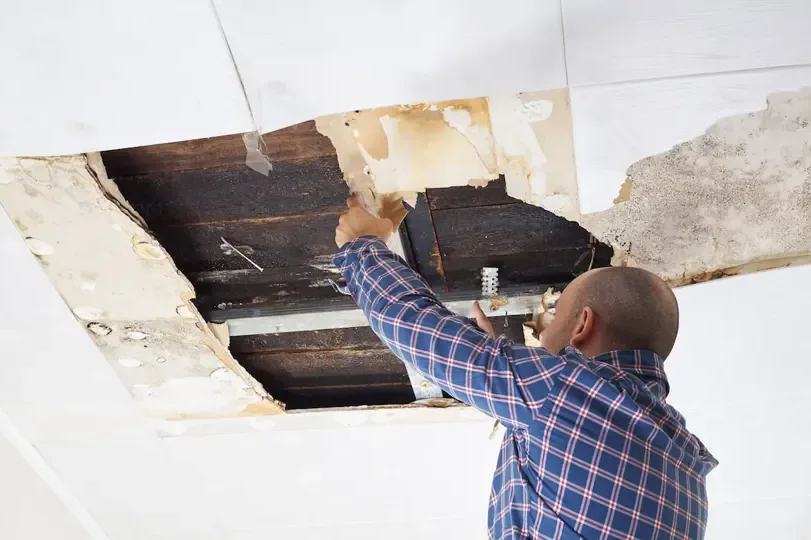
Water extraction removes accessible liquid before this phase begins. Depending on the source, ceiling damage cleanup may also provide access to wet overhead framing. Each preceding task should leave the retained assembly available for measurements and effective evaporation rather than conceal a damp layer behind a new finish.
The final discussion explains moisture results and outstanding physical repairs. Equipment removal should follow assessment of the relevant materials, including areas that dried more slowly than the open room. A clear handoff helps the next trade understand which surfaces are ready for rebuilding and which installation requirements still need its own evaluation before work proceeds.
How the structural drying work progresses
Establish the initial condition
The drying team records affected materials and comparison readings, identifying layers still wet after extraction and the access available for effective moisture removal.
Build the drying environment
Air movement and dehumidification are arranged around the retained assembly, with power and occupied routes considered so equipment can function safely throughout the work.
Evaluate the measured response
Repeated checks compare progress at relevant locations, prompting changes to access, equipment or source investigation where moisture remains elevated or a section stops responding to the planned approach.
Document the completion decision
Final readings and material condition support the drying handoff, with remaining physical damage or installation requirements identified for the owner and the trade responsible for rebuilding the affected area.
Structural Drying coverage in Forest Park
Drying assessments for Main Street premises and homes near Starr Park or Bill Lee Park focus on the retained wet materials. Access to cavities, equipment power and occupied room arrangements helps establish a practical monitoring and drying plan.
The same service nearby: structural drying in Morrow, Hapeville, Riverdale.
Water damage restoration in Forest Park · every town coveredRelated water damage services in Forest Park
Structural Drying questions in Forest Park
Does dry air mean the framing is dry?
Room humidity describes the air, while framing measurements address the material itself. A concealed or dense section can retain moisture after the room feels comfortable, so the endpoint needs evaluation of the affected assembly as well.
Why might equipment placement change during the work?
Materials release moisture at different rates and access can change after inspection. Readings may show that airflow should be redirected or another layer examined, allowing the drying plan to respond to the actual condition of the building.
Can windows stay open while dehumidifiers operate?
The intended room environment should be discussed with the drying team. Unplanned changes can introduce additional moisture or disrupt the equipment arrangement, so ventilation choices should follow the conditions the plan is designed to manage.
What happens if a wall remains damp?
The crew examines source control, access and the wall assembly to understand the slow response. Trapped liquid, wet insulation or a sealed layer may require a different approach before continued equipment use can produce useful progress.
Is a fixed equipment removal date reliable?
Completion depends on material condition and the repair requirements rather than a date alone. The drying assessment should explain the remaining wet areas and what readings or access checks are needed before machines can be removed.
What records should accompany the final inspection?
A useful record identifies affected materials, measurement locations, progress and final condition. It should distinguish drying completion from physical repairs that remain, giving the owner and subsequent trade a clear basis for the next work stage.
Let material condition determine the next step
An explained endpoint connects equipment use to moisture results and leaves clear information for the repair work that follows.
(888) 532-4616Arrange a retained material assessment