Commercial Water Damage in Lovejoy
A business water loss affects more than the wet floor. The cleanup plan must account for staff movement, stock, equipment and building access while the source is corrected and affected materials are recovered.
(888) 532-4616Discuss the affected business space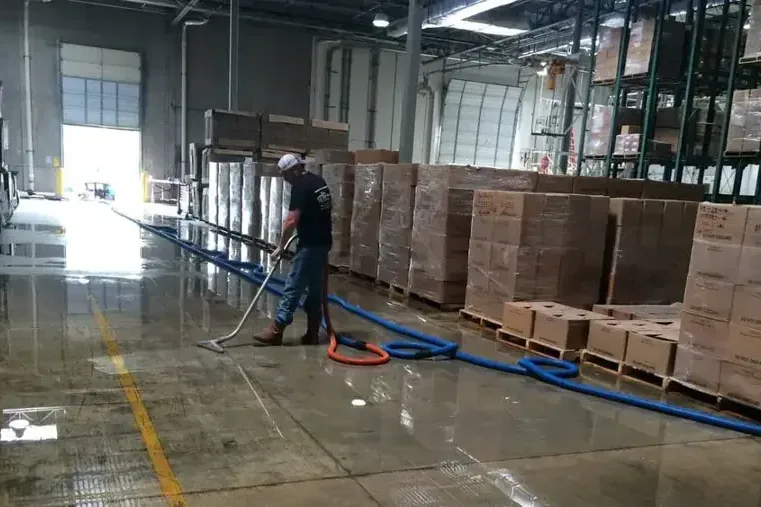
First steps for commercial water damage
- Identify the authorized contact
A manager or owner should coordinate entry, contents priorities and changes to the work area. Clear authority keeps access decisions connected to operating needs.
- Restrict affected employee routes
Staff should avoid wet electrical equipment, unstable surfaces and contaminated rooms. Safe alternate routes need consideration before equipment occupies common walking areas.
- Record stock and equipment conditions
An inventory and photographs help distinguish damaged contents from items moved for access. Keep those records before disposal or specialist evaluation changes the scene.
- Coordinate the source repair
The mitigation team needs to know what failed and whether it remains active. Repair findings help plan extraction and drying around continuing restrictions.
What does commercial water damage cost in Lovejoy, GA?
Commercial cleanup in Lovejoy varies with building use, affected contents, wet materials and the access required to carry out the work. These broad mitigation bands support initial planning. Equipment repair, stock replacement and reconstruction should remain distinguishable from removal, cleaning and drying in the estimate.
Limited business room
- Defined wet space
- Simple equipment access
- Limited contents relocation
Multiple occupied spaces
- Several treatment zones
- Coordinated staff routes
- Expanded material recovery
Large or complex loss
- Extensive contents planning
- Restricted work sequences
- Broader drying footprint
Water category, wet area, material class and the delay before drying change the total. The water damage cost calculator compares a planning range before an on-site assessment.
The commercial water damage process
- 1
Establish operational priorities
The response team checks the source, access authority and affected functions with the manager, identifying safety restrictions and contents that require particular handling during the work.
- 2
Organize removal by area
Water collection and contents movement follow a planned route, with attention to unaffected rooms, required exits and different material or contamination conditions across the damaged footprint.
- 3
Set monitored drying zones
Equipment placement reflects the wet assemblies and usable building areas. Repeat readings and access checks help adjust the work when materials or operating requirements change.
- 4
Provide a room specific handoff
Completion records identify treated spaces and remaining tasks, helping the owner or manager coordinate reconstruction, specialist equipment assessment and decisions about returning areas to normal use.
Commercial water damage in Lovejoy requires a clear decision maker before equipment begins moving through the property. A manager can identify occupied areas, sensitive contents and access restrictions that are not obvious from the wet floor. The mitigation scope then connects those operating needs with the actual water source, affected assemblies and safety conditions.
Map the building's use alongside the damage
Lovejoy Community Center is on Hastings Bridge Road, and Lovejoy City Garden is on Steele Road. The garden includes a store built with salvaged lumber from a barn, church and school. These community spaces reflect different building uses around the city. Each commercial loss likewise needs a plan based on its own rooms, contents and construction.
Along Tara Boulevard, an access description should identify the correct entrance, the person authorizing work and any area that must remain restricted. Inside, the manager and mitigation team can establish which contents require urgent protection and which routes can support removal equipment. A building may need several treatment zones when different materials or water conditions are involved.
Protect operations without overlooking wet layers
A usable room can still share a wet wall or continuous floor with the damaged space. Keeping operations moving should not mean ending inspection at a convenient doorway. The team checks connected materials, plans containment where appropriate and explains when access or noise may affect nearby activity. Reopening decisions depend on safety and the work still required.
- Identify stock, records and equipment affected by water before items are relocated.
- Assign an authorized contact for access changes and scope questions.
- Preserve required exit routes while planning equipment and hose placement.
- Record room conditions before contents movement alters the original damage pattern.
Wet electrical equipment and contaminated areas should remain outside staff access until assessed. Employees should not move powered machinery or enter unstable rooms to retrieve stock. The building's responsible contact needs to coordinate safety restrictions with the appropriate repair trades before routine use resumes.
Document the handoff between tasks
Extraction for wet floors reduces accessible liquid so contents and material inspection can proceed more effectively. Structural drying then addresses retained moisture in the assemblies selected to remain. Equipment routes and monitoring visits should be coordinated with the manager responsible for the space.
The closing record should distinguish recovered areas from spaces still awaiting repair. Photographs, contents notes and material readings help the owner, tenant and repair contractor discuss the same scope. A dry looking entry area is useful for access, but the full affected footprint needs its own completion assessment before the building's recovery is considered finished.
How the commercial water damage work progresses
Establish operational priorities
The response team checks the source, access authority and affected functions with the manager, identifying safety restrictions and contents that require particular handling during the work.
Organize removal by area
Water collection and contents movement follow a planned route, with attention to unaffected rooms, required exits and different material or contamination conditions across the damaged footprint.
Set monitored drying zones
Equipment placement reflects the wet assemblies and usable building areas. Repeat readings and access checks help adjust the work when materials or operating requirements change.
Provide a room specific handoff
Completion records identify treated spaces and remaining tasks, helping the owner or manager coordinate reconstruction, specialist equipment assessment and decisions about returning areas to normal use.
Commercial Water Damage coverage in Lovejoy
Commercial assessments around Tara Boulevard and Hastings Bridge Road require an authorized contact, entry details and a description of affected operations. For properties in 30250, the room layout and contents priorities help establish a practical cleanup sequence.
The same service nearby: commercial water damage in Morrow, Stockbridge, Riverdale.
Water damage restoration in Lovejoy · every town coveredRelated water damage services in Lovejoy


Commercial Water Damage questions in Lovejoy
Can part of a business remain in use?
That depends on safety, contamination, access and the work footprint. An unaffected area may still share routes or materials with the wet zone. The manager and appropriate trades should evaluate restrictions before assuming a separate room can operate normally.
Who should authorize changes during cleanup?
The owner or manager should designate a contact with authority over access and scope decisions. Clear responsibility helps coordinate contents movement, source repairs and equipment placement, especially when several occupants or contractors are involved in the same building.
Should staff move wet equipment themselves?
Powered equipment and heavy items can present electrical, movement and contamination hazards after water exposure. Staff should avoid handling them without the appropriate assessment. A contents plan can identify items needing specialist evaluation and establish safe movement routes through the property.
How are affected stock and records documented?
Safe photographs and an inventory should identify the item, location and visible condition before movement or disposal. Sensitive records and equipment may need specialist handling. The cleanup documentation should distinguish damaged contents from belongings relocated simply to create working access.
Does a commercial scope include source repairs?
The estimate should state which tasks are included. Plumbing, roofing or equipment repairs address the cause, while mitigation treats released water and damaged materials. Coordinating those tasks is essential, but their costs and completion records should remain understandable individually.
What supports the decision to reopen a room?
The assessment should consider safety, completed cleaning, material conditions and any equipment or repair work remaining. Dry appearance alone is insufficient. The responsible manager needs a clear handoff describing finished mitigation and outstanding requirements before normal use resumes.
Coordinate recovery around the affected rooms
The restoration team can discuss equipment access, contents priorities and drying zones with the person responsible for the property and its next repair decisions.
(888) 532-4616Discuss business cleanup access