Hardwood Floor Water Damage in Stockbridge
Raised edges can remain after a wood floor loses its visible puddle. Stockbridge hardwood assessment looks at board movement and moisture through the assembly so the repair decision reflects more than the condition of the surface finish.
(888) 532-4616Discuss changes in the wood floor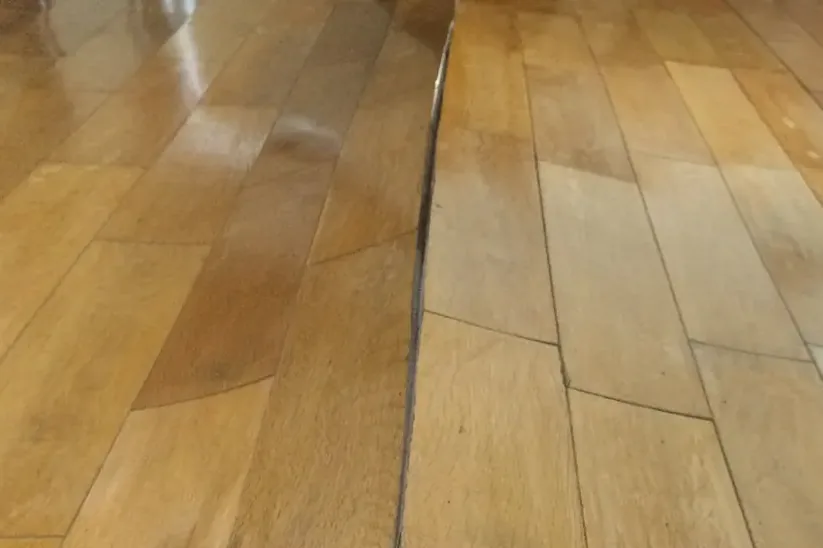
First steps for hardwood floor water damage
- Describe the floor changes
The owner identifies where ridges, movement or discoloration appeared and how those areas relate to the leak, doorway transitions and neighboring wet rooms.
- Inspect the installed assembly
The assessment records board condition and accessible supporting layers so that drying methods reflect the flooring present rather than a generic surface treatment.
- Track moisture through the area
Readings at identified locations show the distribution of retained dampness and help compare the response of boards with the materials underneath the visible floor.
- Coordinate the finishing decision
Drying observations and remaining shape changes are passed into the repair discussion before sanding, selective replacement or installation of a different floor covering begins.
What does hardwood floor water damage cost in Stockbridge, GA?
Hardwood damage costs in Stockbridge depend on board condition, underlayer wetting and practical drying access. The planning ranges describe mitigation of the wet assembly. Refinishing, replacement boards and other flooring installation work should be separated from the drying estimate.
Localized wet boards
- Small affected floor
- Accessible perimeter checks
- Focused moisture assessment
Wet floor and underlayer
- Supporting layer dampness
- Additional drying access
- Connected surface monitoring
Broad floor assembly loss
- Extensive board movement
- Larger material scope
- More complex drying
Water category, wet area, material class and the delay before drying change the total. The water damage cost calculator compares a planning range before an on-site assessment.
The hardwood floor water damage process
- 1
Record shape and source
The inspection connects visible floor changes with the water release, documenting the areas that lifted or changed before handling and drying alter the initial appearance.
- 2
Evaluate retained floor access
The team considers whether the installed assembly can be reached for drying and explains any removal needed to inspect wet supporting materials beneath the boards.
- 3
Compare repeat material readings
Measurements from consistent locations help show whether the floor and adjacent construction are responding together or whether a concealed layer needs a revised approach.
- 4
Prepare the flooring repair discussion
The final record describes retained materials, moisture observations and remaining board changes so the finishing trade can evaluate practical repair choices for the installed floor.
The first sign of wood floor damage may be a slight ridge underfoot rather than standing water. Board edges can change as moisture reaches the assembly unevenly. A careful assessment records that shape change and the condition underneath, then determines whether drying access is practical and which parts of the installed floor need a separate repair decision.
Begin with the floor that is actually installed
Board construction, finish and attachment affect how the floor can be assessed. The team should identify accessible edges and transitions before selecting a drying approach. A room with visible wood boards may also include underlayment or another supporting layer that holds moisture after the upper face looks clear.
The Aaron and Margaret Parker Jr. House and the Walden-Turner House are listed on the National Register of Historic Places. Those landmarks and Reeves Creek Trail help orient Stockbridge property descriptions. At any affected home, the flooring assessment should document the specific installed materials and the water release that reached them.
Compare the surface with the concealed layer
A moisture pattern across the boards can differ from the pattern below them. The inspection follows the release through doorways and along the perimeter, where trim may conceal wet edges. When access to the supporting layer is limited, the scope should explain what further inspection or removal is needed to understand its condition.
- Record cupping or raised edges before the floor shape changes.
- Check adjacent rooms where boards continue through open doorways.
- Inspect transitions to tile or other finishes for trapped moisture.
- Note separated boards and areas that no longer sit securely.
Buckled or loose boards can create a walking hazard. Occupants should avoid forcing them flat or sanding the raised areas while the assembly remains wet. Floor heating or aggressive improvised drying can alter the surface before the underlying moisture and repair options have been properly assessed.
Choose the finish work after moisture evaluation
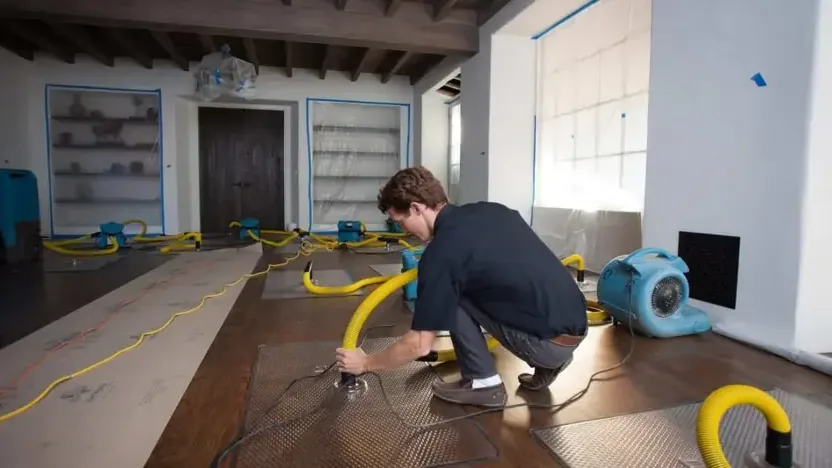
If water remains on the surface, extraction is an early part of the work. Retained board and underlayer moisture then needs its own plan. The condition of the assembly determines whether specialized floor drying access is suitable and what materials can remain in place.
Structural drying support can address connected wall bases and supporting construction alongside the floor. Final decisions about sanding, board replacement or a larger flooring repair should follow the drying observations and the floor specialist's evaluation. Documenting both the measurements and the visible board condition gives the owner a clearer basis for that discussion than a promise that every wet floor will return to its original shape.
How the hardwood floor water damage work progresses
Record shape and source
The inspection connects visible floor changes with the water release, documenting the areas that lifted or changed before handling and drying alter the initial appearance.
Evaluate retained floor access
The team considers whether the installed assembly can be reached for drying and explains any removal needed to inspect wet supporting materials beneath the boards.
Compare repeat material readings
Measurements from consistent locations help show whether the floor and adjacent construction are responding together or whether a concealed layer needs a revised approach.
Prepare the flooring repair discussion
The final record describes retained materials, moisture observations and remaining board changes so the finishing trade can evaluate practical repair choices for the installed floor.
Hardwood Floor Water Damage coverage in Stockbridge
Hardwood assessments in Stockbridge include properties identified near Reeves Creek Trail or the Walden-Turner House. The actual floor type, affected rooms and access to board edges are needed to organize the inspection and discuss the wet assembly.
The same service nearby: hardwood floor water damage in Morrow, Lovejoy, Forest Park.
Water damage restoration in Stockbridge · every town coveredRelated water damage services in Stockbridge

Hardwood Floor Water Damage questions in Stockbridge
Can raised board edges settle during drying?
Some shape changes can improve as moisture conditions change, while others remain because of damage or attachment problems. The floor needs evaluation over the drying process. Repair decisions should consider both the material readings and the remaining physical condition.
Should a wet floor be sanded immediately?
Sanding changes the board surface before the wet assembly has been fully evaluated. Moisture may still differ between the upper face and the supporting layer. The flooring specialist should assess finish work after the relevant drying observations are available.
Why check underneath apparently intact boards?
An intact upper face can cover a damp underlayer or supporting surface. That hidden moisture can affect the repair approach and installation conditions. Accessible edges and transitions help establish whether the floor assembly needs further inspection or selective removal.
Does every damaged wood floor need replacement?
The decision depends on board construction, water exposure, attachment and the condition after drying. The assessment should describe the observed damage and practical options. A room by room evaluation is more useful than assuming all wet wood behaves identically.
Can the room stay open while boards are buckled?
Raised or loose flooring can make normal walking unsafe and may also complicate equipment placement. The affected area should be treated according to its condition. The team can explain safe access needs while the floor assembly is assessed.
What should accompany the final repair recommendation?
The recommendation should consider source correction, moisture observations, visible board movement and the supporting layer's condition. That information helps the owner understand why a specialist proposes refinishing, selected board work or broader replacement after the mitigation phase.
Let the assembly inform the flooring decision
A material assessment can explain the wet boundary and the observations needed before sanding or replacement work begins inside the room.
(888) 532-4616Discuss wood floor recovery options