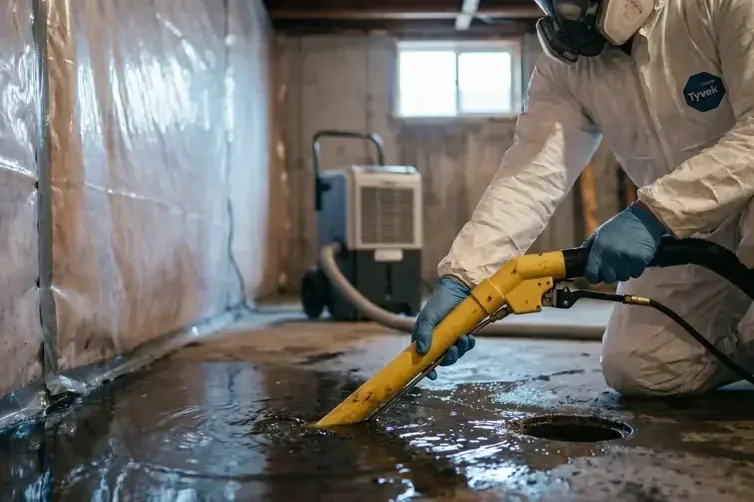
Wastewater returning through a fixture in Forest Park requires an indoor safety response and a drain investigation. Clayton County Water Authority explains that grease, debris and roots can obstruct sewer piping, and that heavy rain can contribute to backups. An accessible cleanout helps the drainage investigation proceed while the affected room stays isolated for cleanup assessment.
Key takeaways
- Stop using affected fixtures and keep occupants away from wastewater.
- Tell the responding drain professional where the cleanout is located.
- Keep the obstruction repair record separate from the indoor cleanup scope.
- Report a damaged cleanout cap because it can admit stormwater.
- Have the cleanup team assess contaminated contents and building materials before drying.
Contain the occupied area before investigating the drain
The first household decision is where people can safely remain while wastewater is present. An affected bathroom, laundry area or lower room should be kept out of use, with children and pets prevented from entering.
Occupants should avoid walking through the water to retrieve stored items, operate electrical equipment or reach a fixture on the far side of the room.
The sewage cleanup assessment starts with the source, affected surfaces and contamination conditions. A drain professional handles the blockage investigation while the mitigation team determines how the indoor area can be entered and cleaned.
Keeping these responsibilities clear helps prevent a cleared drain from being mistaken for a completed room cleanup.
- Suspend use of fixtures connected to the affected drain.
- Keep the route into the wet room closed to occupants.
- Describe visible wastewater from a dry, accessible position.
- Leave contaminated belongings for the cleanup assessment.
Make the cleanout location part of the service request
CCWA advises property owners to keep the lateral cleanout accessible. A homeowner who knows its location can describe it to the responding professional without opening it or entering a wet area.
Landscaping, stored materials or a locked gate should be mentioned when they affect access, so the person arranging the visit can coordinate a safe approach.
The authority describes field inspection from the cleanout toward the sewer main and identifies the private lateral as the property owner's responsibility. These details help organize the questions asked during a backup: which section was inspected, where an obstruction was found and who is handling the repair.
The property contact should retain the actual findings for the affected building.
A service request around Forest Parkway can include the entrance used to reach the property and the fixture where water first appeared. This is more useful to the responding team than an assumption that the whole street has the same problem.
Any other affected fixtures should be listed separately with the order in which they showed trouble.
Describe rain and damaged caps without opening the system
The utility identifies damaged cleanout caps as a route for stormwater to enter sewer piping. If a cap is visibly broken, the owner can report its condition from a safe position and arrange professional attention.
A cap, drain opening or backed up fixture should not be used as a place to test flow during an active indoor overflow.
Rainfall timing also belongs in the incident record because CCWA notes that heavy rain can overload a sewer system. The record should state what happened at the property: rain was occurring, a fixture rose, or wastewater reached a particular doorway.
A drain investigation then establishes the condition of the relevant piping and identifies any repair needed to restore reliable drainage.
- Record whether the backup began during rain or fixture use.
- Report an observed cap defect without removing the cap.
- Keep outdoor condition photographs separate from indoor contamination images.
- Request a written description of the inspected pipe section.
Evaluate each material touched by wastewater
Cleanup planning follows the water path from the fixture through floor edges, wall bases and contents. The mitigation team identifies porous materials, concealed contact areas and surfaces that can be cleaned within the agreed scope.
Items should be evaluated where they were affected before anyone carries them into an otherwise clean bedroom, hallway or vehicle.
Extraction requires equipment and handling appropriate to the water conditions. Water removal from affected rooms is coordinated with contamination control, removal decisions and cleaning.
Fans should not be placed by an occupant to blow across a contaminated floor, because the work area needs a controlled approach before drying equipment is arranged.
The contents record should distinguish an item from the surface supporting it. A storage container may have a clean upper surface while its base stood in wastewater, and the floor beneath it still needs assessment.
Photographs of those contact points give the owner and cleanup contractor a clearer basis for deciding what stays and what leaves the room.
Check hidden edges after the obstruction is cleared
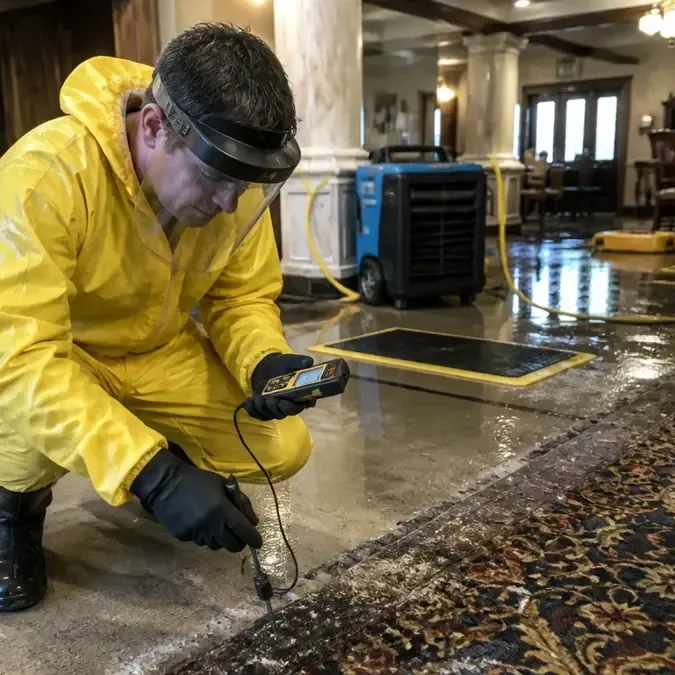
Restored drainage allows the plumbing work to move forward, but the room may still contain wet backing, wall bases or material under a floor covering. The cleanup team checks these locations and records any opening required to reach them.
Each removal or access decision should describe the affected material and the condition found behind or below it.
The building drying plan follows the cleanup and material assessment. Readings can then track retained materials without losing the connection to the original contaminated area.
The crew should identify which parts of the room remain restricted and explain what work must be completed before occupants resume normal use.
- Inspect the base of walls reached by the backup.
- Record concealed contact exposed during controlled removal.
- Keep drain repair completion and room cleanup completion as separate entries.
- Confirm which retained materials still need monitored drying.
Keep the final record useful for the next maintenance visit
A complete incident file includes the discovery sequence, the drain findings, cleanup photographs and the drying record. The drain contractor's notes should identify the obstruction or defect actually found, along with the work performed.
The room record should show affected materials and contents rather than simply stating that the sewer problem was fixed.
Forest Park's comprehensive plan describes both single family and multifamily housing. In a building with more than one occupied space, the property contact should identify who can authorize entry to each affected area and receive the completed records.
A clearly named contact helps keep fixture testing, occupant access and room cleanup coordinated.
For future service, the owner can retain a cleanout location note with the maintenance file. The utility also advises a private lateral inspection during a home purchase, which makes a clear record of prior findings useful to preserve.
That file should describe this property's work and the contractor's recommendations for its piping.
Questions
Should the homeowner remove a cleanout cap during a backup?
The drain professional should control access to the sewer opening. The homeowner's useful contribution is identifying the location and describing any visible obstruction to access from a safe area.
Who does CCWA identify as responsible for the private lateral?
The utility assigns that responsibility to the property owner. The drain contractor should identify the location of a defect so the owner can arrange the appropriate work.
Why keep a broken cap photograph?
It records the condition present when the backup was reported and gives the drain professional a specific feature to examine. The repair record can then show how that opening was addressed.
Can an affected room reopen as soon as toilets drain again?
Room access should follow the cleanup contractor's assessment of contamination and remaining work. Plumbing function alone does not complete the evaluation of wet flooring, wall bases or contents.