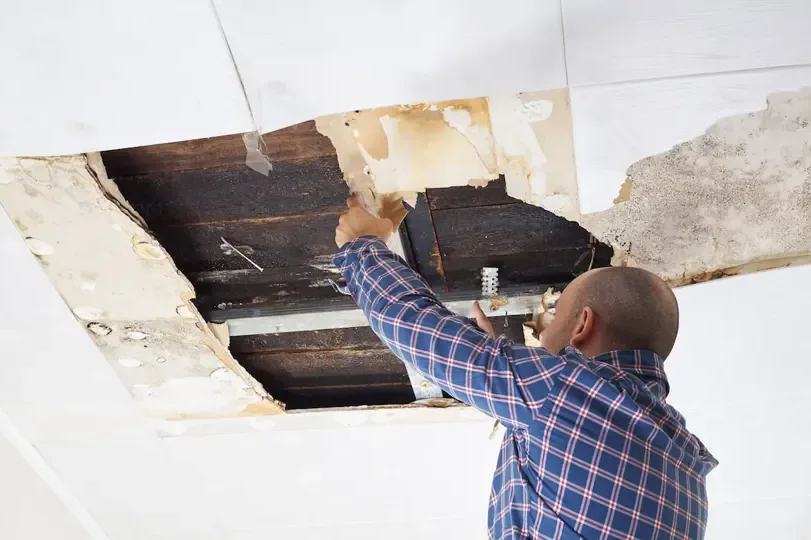
A ceiling stain in Morrow can attract attention long after water first entered the space above it. A homeowner near Jonesboro Road may notice a dark edge after rain, a drip during bathroom use, or paint that has started to loosen. The useful starting point is the sequence of events and the rooms involved, followed by an inspection that traces the water back to its entry point.
Key takeaways
- Keep occupants away from a sagging ceiling and any electrical fixture touched by water.
- Record when the mark changed and what plumbing or weather activity occurred around that time.
- Arrange source repair and ceiling assessment as connected but separate tasks.
- Require moisture checks beyond the visible stain before covering the damaged area.
Record the first change without standing beneath it
A photograph from the doorway can show the whole ceiling, the nearest wall and the location of an overhead fixture. A closer image is useful only from a safe position; a person should not climb onto furniture or stand under a bulge to obtain it.
The room can remain closed while an appropriate professional evaluates unstable material and electrical concerns.
The discovery note should say whether the surface was dripping, discolored, cracked or visibly swollen. Those observations give the assessment team a starting point that is more useful than a guessed pipe failure.
Items directly beneath the affected ceiling should stay in place until a safe approach has been established, especially where removal would require passing below loose material.
- Note the room and the side of the ceiling affected.
- Keep people and pets outside the wet area.
- Photograph the stain boundary from a stable, dry position.
- Leave wet switches and light fittings untouched.
Compare the ceiling with the space directly above
The room above matters because a bathroom, appliance connection, roof space or another occupied room creates different inspection questions. A contractor can follow the building layout and check accessible connections before deciding where an opening is useful.
Ceiling water damage assessment addresses the damaged assembly while the source investigation identifies what needs repair.
Water may travel along a framing member or across a concealed surface before reaching the mark below. A homeowner can describe where an upstairs fixture was used and whether the stain changed afterward, but repeated test use can add water.
The plumber or roof contractor should control any testing and document the result before the room is returned to normal use.
For a property reached from Morrow Road, the intake description should also identify which entrance leads to the affected room and whether another occupant controls the space above. That practical information helps arrange access to both sides of the ceiling.
A room name and a simple floor sketch are often clearer than an isolated close photograph.
Treat rainfall timing as part of the inspection record
A mark that enlarges during rain deserves an exterior entry investigation as well as an interior assessment. The homeowner can record whether water appeared at a wall junction, around an opening or near the middle of the ceiling.
The roof contractor then examines the relevant exterior details from a safe working position and records any repair that stops further entry.
The roof leak cleanup scope includes the building materials that became wet after water crossed the exterior. Repairing an entry point and drying an enclosed ceiling require different access and documentation.
Keeping the roof findings with the room photographs gives the repair contractor a clear sequence without requiring anyone to reconstruct the event from a stain alone.
- Write down whether the room was wet before the rain began.
- Keep roof repair photographs with the interior room record.
- Have exterior testing directed by the contractor handling the roof.
- Recheck the ceiling after source control rather than painting immediately.
Measure the ceiling edges and adjoining materials
A technician checks the visible mark and accessible surrounding surfaces to outline the affected area. The inspection can include wall tops, trim, the adjoining ceiling bay and the accessible floor above.
Measurements should identify the material and location, because a reading from painted wallboard cannot simply stand in for every layer concealed behind it.
A purposeful opening may be needed to examine wet insulation, damaged backing or a cavity that cannot be evaluated from the room. The team records why the opening is needed and photographs the exposed layers.
The homeowner then has a room specific explanation of what can remain, what requires removal and which concealed surfaces still need attention.
The condition of the ceiling governs how work proceeds. Loose attachment, damaged finishes and trapped water can change the removal plan even where the mark looks small.
An assessment that includes those details gives the later repair crew a useful description of the assembly rather than a broad instruction to patch the brown spot.
Keep drying access available after the drip stops
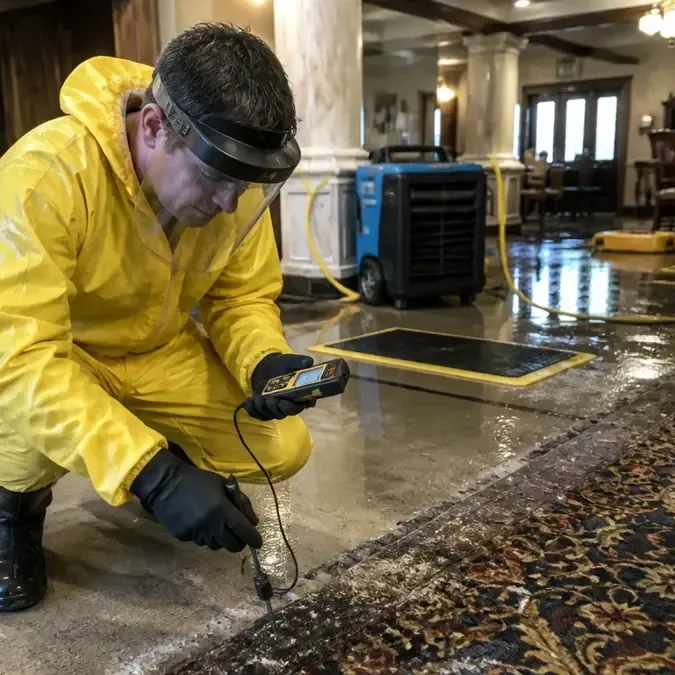
Stopping an active leak changes the source condition, while the wet ceiling still needs a drying decision. The crew plans airflow and moisture removal around the exposed materials, access openings and occupied rooms.
The structural drying process follows repeated material readings so equipment adjustments correspond to the places that remain wet.
Furniture placement, a closed access opening or an occupant moving equipment can interrupt the intended arrangement. The property contact should receive a clear explanation of which areas must remain accessible and whom to contact if equipment needs to move.
That makes daily use of unaffected rooms easier while preserving the access needed for continued inspection.
- Keep the inspection points identifiable throughout drying.
- Record material readings together with room conditions.
- Leave approved cavity access open until the drying assessment is complete.
- Document any equipment relocation and the reason for it.
Prepare a repair handoff that follows the whole water path
A useful handoff pairs the source repair record with final observations at the ceiling and adjacent materials. It identifies removed sections, retained layers and any remaining finish work.
The painter or ceiling installer can then see where a patch belongs and which work must be completed before the finished surface is closed.
Around Southlake Parkway, the same practical record can accompany a home or a business water loss: the affected room, the observed water path and the repair scope. Property access information belongs with that file so the next contractor reaches the correct space.
The documentation should describe this particular ceiling, including changes discovered after an opening, rather than relying on the first photograph alone.
The owner should also retain the original discovery images. Comparing them with the final room condition makes it easier to distinguish the completed water repair from older marks elsewhere.
A written list of unfinished trim, paint or fixture work helps prevent a dried assembly from being mistaken for a fully restored room.
Questions
Should a swollen ceiling be punctured to drain it?
An occupant should keep clear and leave controlled access to a professional who can evaluate collapse and electrical hazards. Creating an opening from below can release water and unstable material into the room.
Can a stain appear away from the actual leak?
Yes. The inspection follows accessible framing and adjoining surfaces back toward the entry point, with plumbing or exterior checks selected for the building layout.
What information helps when the upstairs room is occupied?
The property contact should identify the person who can authorize entry, the fixtures in that room and any recent change in use. Access arrangements should be settled before testing begins.
What should remain in the file after ceiling repairs?
Keep the source repair invoice, photographs of exposed layers, the moisture assessment and a list of finishing work. Together they explain how the opening was investigated and prepared for closure.